TLDR;
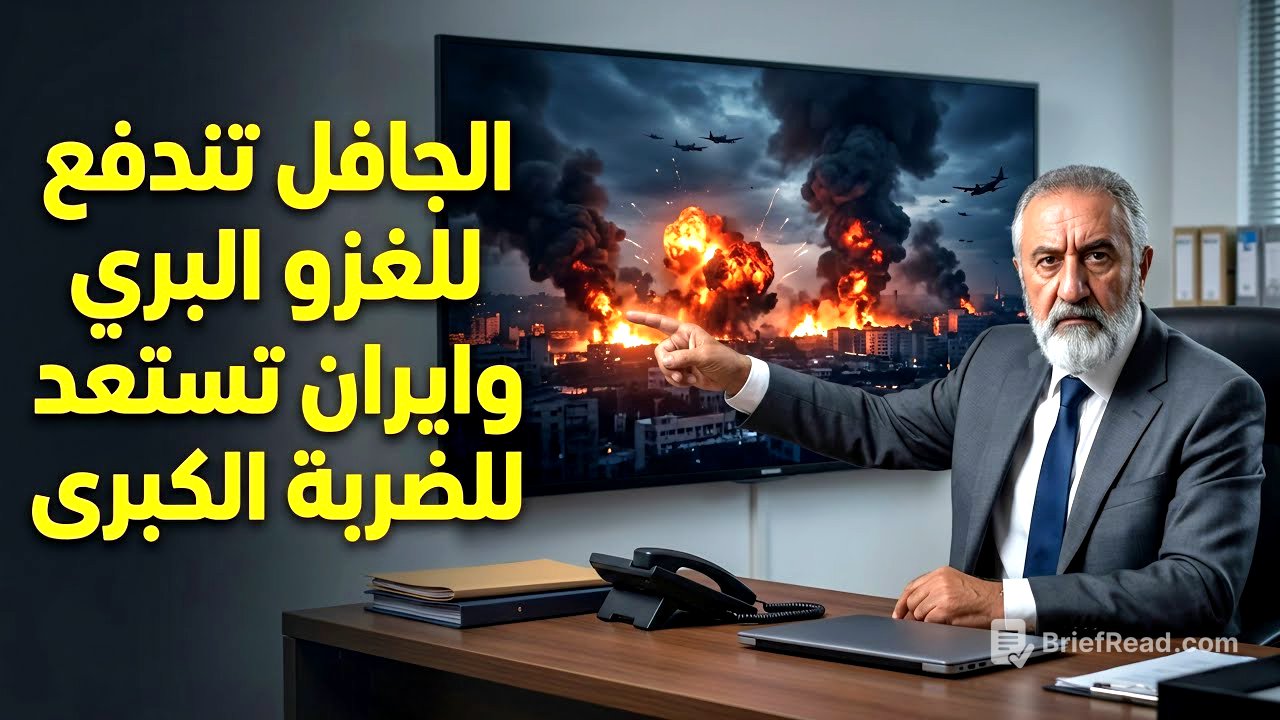
This video discusses the escalating tensions in the Middle East, focusing on the potential for a ground operation in Iran and the broader implications for regional and global stability. It highlights the strategic importance of the Strait of Hormuz, the deployment of US Marines, and the potential for attacks on Iranian nuclear facilities. The analysis also covers the economic pressures on various countries, the role of international actors like Russia and China, and the potential for internal unrest within Iran.
- Potential ground operation in Iran is looming.
- Strait of Hormuz is a key strategic point.
- Economic pressures and global power dynamics are crucial factors.
US Military Deployment and Strategic Objectives [0:06]
The speaker suggests that the US is preparing for a ground operation targeting Tehran, with the initial focus on opening the Strait of Hormuz, a critical strategic chokepoint that impacts global energy prices. The speaker references a report from National Interest indicating that 3,000 US Marines are preparing for a large-scale deployment in the Middle East. The speaker believes their objective is to control islands with military oversight of the Strait of Hormuz, potentially leading to a strong reaction from Tehran. The larger plan involves operations targeting Iranian nuclear facilities to control enriched uranium.
Potential Military Actions and Iranian Response [3:16]
The speaker anticipates an aerial assault on Iranian islands and potential attacks on nuclear sites. These actions are expected to provoke a significant response from Iran, potentially involving the launch of over 1,400 missiles with substantial destructive capabilities. The speaker highlights that Iran possesses missiles capable of reaching targets within eight to nine minutes, posing a challenge to existing defence systems. The speaker believes that any military operation will be costly for the US and will have far-reaching consequences.
Internal Unrest and External Support for Opposition [4:44]
The speaker suggests that assassinations are targeting intelligence officials within Tehran, indicating a plan to destabilise the Iranian government from within. The speaker believes that striking internal security agencies suggests a strategy to mobilise internal dissent, potentially supported by Kurdish groups along Iran's borders. The speaker notes that while the success of this plan is uncertain, it represents a significant strategic approach.
Economic Warfare and Global Impact [8:24]
The speaker believes that Iran is attempting to exert economic pressure on the world by disrupting key shipping routes. If the Strait of Hormuz is closed, the Bab el-Mandeb Strait would become a critical chokepoint, forcing ships to reroute around the Cape of Good Hope, increasing transportation costs and disrupting global trade. The speaker highlights that Iran's strategy involves leveraging economic pressure to achieve its objectives with minimal military and financial investment, using proxy groups to execute these actions.
US-Russia Relations and Regional Conflicts [13:39]
The speaker mentions that the US has engaged in closed-door negotiations with Russia, which some Russian media outlets have reported as involving a potential deal related to Ukraine in exchange for information on Iran. The speaker suggests that Russia rejected this proposal. The speaker believes that the US suspects Russia of providing intelligence to Iran, potentially with support from China, which is focused on its Belt and Road Initiative. The speaker describes the situation as a complex geopolitical and economic conflict involving multiple actors with religious and economic motivations.
Analysis of Regional Dynamics and Future Scenarios [17:15]
The speaker criticises those who rejoice in the conflict, particularly those who believe they are unaffected. The speaker warns of broader regional consequences, referencing previous predictions about attacks on Syria that have come to pass. The speaker believes that Turkey is attempting to use Syria as a proxy battleground against the US, while Iran seeks to prevent Syrian government forces from entering certain areas. The speaker emphasises that no country is exempt from the economic and strategic repercussions of the ongoing conflict.
Gold Market and Economic Predictions [20:19]
The speaker reiterates a previous prediction that the price of gold would experience a setback before rising to $6,000. The speaker advises against selling gold, viewing it as a store of value rather than an investment. The speaker believes that gold prices will surge once the US Federal Reserve lowers interest rates.
Syria and Regional Realignments [22:27]
The speaker believes that Syria will face accusations of supporting Hezbollah, leading to further attacks. The speaker believes that external actors do not differentiate between various factions within the region, viewing them as a single entity. The speaker suggests that the current project in the region is nearing completion, with no turning back. The speaker believes that Syria is being used for political leverage, with different factions being supported or suppressed based on strategic needs.
Critique of Political Islam and Regional Leadership [40:20]
The speaker defines political Islam as the exploitation of Islam for political gain, contrasting it with genuine Islamic values. The speaker believes that many of the region's problems stem from Islamist groups seeking power. The speaker criticises leaders who compromise their principles for political expediency, citing examples of alliances with those they previously opposed. The speaker calls for leaders who prioritise the well-being of their people and avoid conflicts. The speaker believes that many Arab leaders are mere pawns in larger geopolitical games, lacking true sovereignty and political understanding.
Future of Syria and Regional Stability [47:39]
The speaker believes that Alawites, Druze, and Christians in Syria do not seek power and that the best solution for Syria is a moderate leader accepted by all groups. The speaker emphasises the need for a leader who can protect the people's wealth and honour. The speaker believes that all factions in Syria and Iraq will ultimately be targeted. The speaker believes that the project of investing in religions through governance has ended, and the global political establishment is moving away from these investments. The speaker believes that if Iran falls, it will lead to the collapse of political Islam in the region.
Importance of Critical Analysis and Reliable Information [37:13]
The speaker encourages viewers to seek information from credible sources, such as the Washington Institute for Near East Policy and the Hoover Institution, rather than relying on Arab media outlets, which the speaker accuses of bias and misinformation. The speaker believes that these institutions publish their analyses openly because they are confident that few will read them. The speaker advises viewers to consult international news agencies like Reuters, Sky News England, National Interest, and Foreign Policy for accurate information.
Channel Support and Future Broadcasts [55:58]
The speaker acknowledges that the channel faces censorship and limited reach due to its independent stance and criticism of certain actors. The speaker requests support through likes and Super Chats to enhance the channel's visibility. The speaker announces that the live broadcasts will continue daily at the same time (12:00 AM Mecca time) during Ramadan. The speaker expresses gratitude to viewers from all backgrounds who support the channel and trust its analysis.