TLDR;
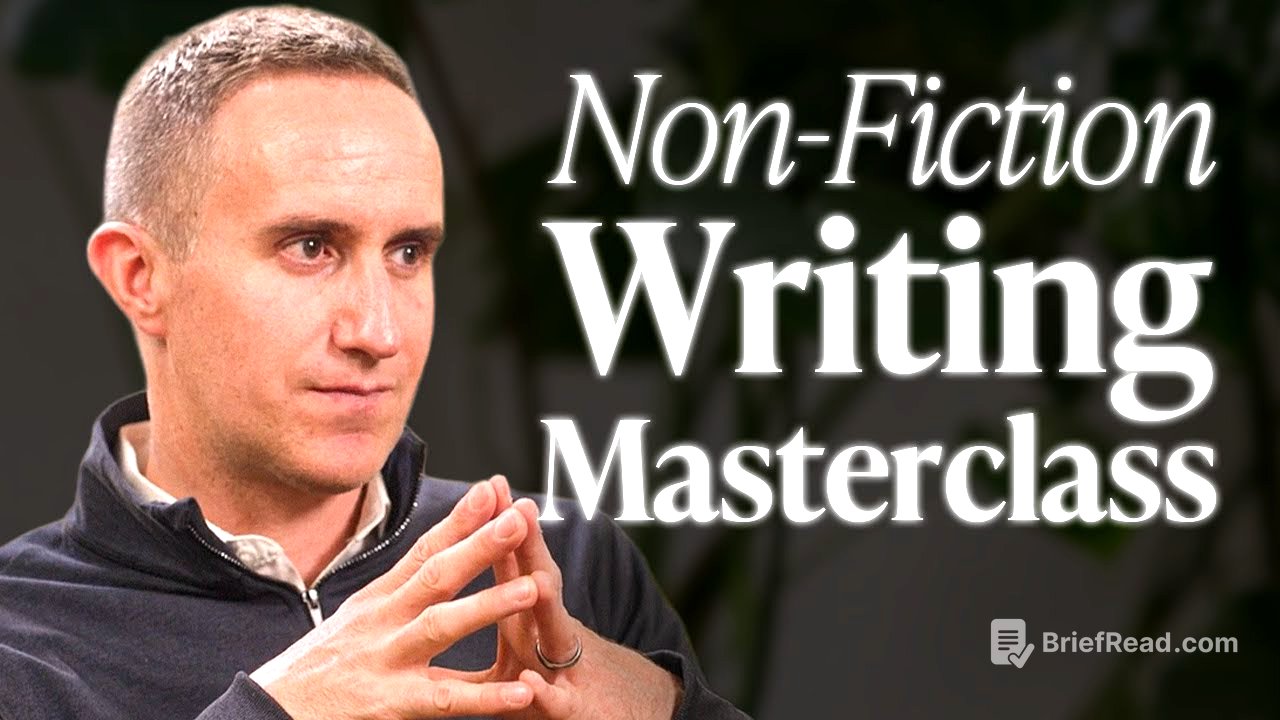
This conversation with Morgan Housel explores the art of storytelling in writing, emphasising simplicity, observation, and the importance of personal voice. Housel shares his methods for collecting and crafting stories, his perspective on using AI in writing, and his thoughts on the value of books in the digital age. He stresses the significance of writing for oneself and the need to cut through the noise to deliver impactful, concise content.
- Simplicity and clarity are key to effective writing.
- Storytelling is more impactful than data dumping.
- Personal experience and observation are crucial for generating unique content.
- AI should be used cautiously, primarily as a research tool.
- Writing should be a selfish act, driven by personal interest and voice.
Collecting Good Stories [0:50]
Morgan Housel emphasises the importance of clarity and conciseness in writing, stating that there are no extra points for difficulty. He uses Eric Larson as an example of an author who can convey complex historical events succinctly. Housel believes that readers retain more when the writing gets straight to the point, especially in today's world where distractions are abundant. He also shares that Mark Twain would read aloud to his family and cut out parts where he saw them getting bored.
Storytelling Beats Facts [4:12]
Housel highlights the importance of storytelling in non-fiction, particularly in finance and business. He argues that stories help readers empathise and contextualise information, making it more relatable and memorable than a simple data dump. He aims to be a storyteller to survive as an author, because just writing about the stock market will bore people.
How to Hook Readers [5:16]
Housel illustrates the power of hooks in drawing readers in, using the example of the Vanderbilt family's financial downfall. He suggests that celebrity gossip sites like TMZ are successful because they are very good at hooking you in. He also notes that while it's important to grab attention, it should be done honestly and ethically, avoiding hyperbole that distorts the truth.
How Morgan Uses ChatGPT [8:39]
Housel shares his perspective on using ChatGPT, noting that while it has become a frequent research tool, he remains an old-school writer who types every word himself. He believes that the process of writing is essential for thinking and that using AI to generate content strips away the true meaning of writing. He uses it as a research tool, like "Google on steroids" but acknowledges its limitations, particularly its tendency to hallucinate or misread sources. He also believes that hard work is important for creativity.
Teaching vs Preaching in Writing [15:53]
Housel discusses the difference between teaching and preaching in writing, particularly in the context of finance. He emphasises that he doesn't know the reader, so he can't give specific advice. He aims to provide broad ideas about the psychology of money, allowing readers to contextualise the information for themselves. He avoids lecturing or shaming readers, instead offering stories about psychology to encourage self-discovery.
The #1 Worst Writing Advice [18:01]
Housel identifies "know your reader" as the worst piece of writing advice, as it often leads to pandering. He believes that everyone is a good writer when writing for themselves in a diary, but the quality declines when they start considering what others want to hear. He encourages writers to write for themselves and let readers figure things out, even if it means they have to look something up.
Wide Funnel, Tight Filter Framework [25:11]
Housel shares Patrick O'Shaughnessy's concept of a "wide funnel, tight filter" for reading books. He advocates starting any book that seems even slightly interesting but being ruthless about abandoning it if it doesn't work. He believes that many people dislike reading because they force themselves to finish bad books.
How to Find Your Writing Style [26:42]
Housel reflects on how his writing style emerged from years of writing multiple blog posts per day and receiving feedback from comment sections. He admits that he used to have a thin skin and cared what people thought, but in hindsight, the feedback pushed him towards something he is now proud of. He also discusses the importance of selfish writing, where he writes to appease himself rather than the audience.
Why Write Books in an Online World [31:45]
Housel explains why he values writing books over articles in the current digital landscape. He views social media as spring training, blogs as regular season games, and books as the Super Bowl. He acknowledges the cultural significance of books and the deeper connection readers form with them compared to online content.
How Morgan Wrote ‘The Art of Spending Money’ [36:20]
Housel discusses how his writing process has changed since publishing "The Psychology of Money". He notes that it was great when he could write 4,000 blog posts and then go back and pick the best ideas. He believes he has become better at knowing what will work and has embraced selfish writing, focusing on stories and jokes that he enjoys.
Morgan’s Admiration for Beautiful Writing [47:16]
Housel expresses his deep appreciation for good writing, even if he disagrees with the substance. He shares a story about a book on D-Day where a particular sentence struck him with its punchiness and profundity. He also mentions memorising lines from Shakespeare to appreciate the rhythm and simplicity of elegant writing.
How to Start a Chapter [53:28]
Housel shares that he has become better at recognising whether a blog or chapter idea will work before he starts writing. He notes that ideas from non-writers rarely work out and that he has learned to trust his own instincts. He also emphasizes the importance of having a common theme within a book to avoid a hodgepodge of random ideas.
Becoming More Observant [57:18]
Housel shares a tip from a friend to improve observation skills: playing "I Spy". He also mentions constantly taking notes of things people say and interrupting conversations to write them down. He believes that being more observant and taking notes over time can add up to something fantastic.
You Don’t Need New Ideas [1:01:01]
Housel reflects on the conversation and concludes that you don't need new ideas, you just have to find a way to tell the story better. He cites Ken Burns as an example of someone who takes well-known events and tells them in a way that adds more value than anyone else. He also shares a line from John Grisham about the slow buildup followed by sudden shocks.
How Morgan Deals With Rejection [1:08:16]
Housel shares a story about Kevin Costner and a homeless friend who wrote the manuscript for "Dances with Wolves". He uses this story to illustrate that you never know where talent will come from and that everyone deserves a chance. He also reveals that "The Psychology of Money" was rejected by every US publisher and emphasizes that rejection is subjective and doesn't necessarily mean the work is bad.