TLDR;
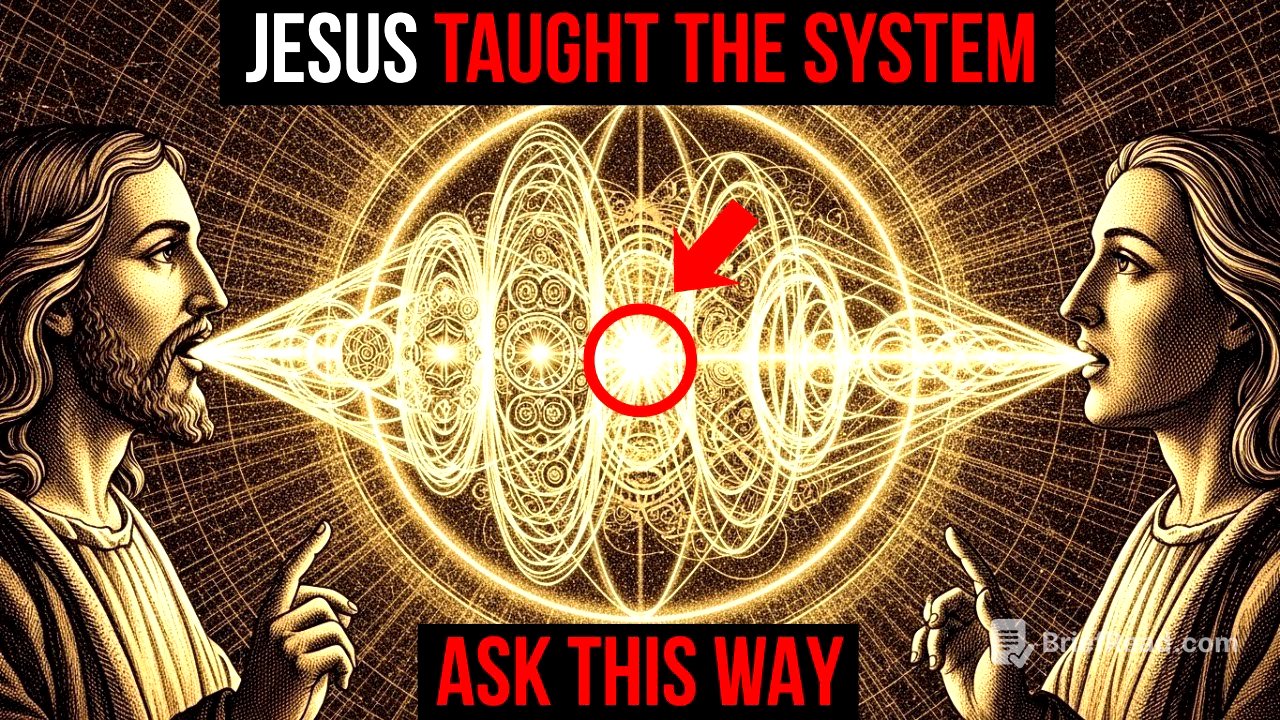
This video explains the true meaning of "ask and you shall receive" as taught by Jesus, contrasting it with the distorted version presented by religious institutions. It highlights that effective asking involves recognising your inherent connection to source, aligning your consciousness with what already exists, and receiving in consciousness before expecting material manifestation. The video outlines a three-part system for asking correctly, emphasising the importance of asking from a place of already having, asking as the monad (your divine self), and receiving immediately in consciousness.
- The traditional approach of begging and pleading from a place of lack is ineffective.
- The church hid this knowledge to maintain control.
- Asking correctly leads to consistent, predictable results, not random occurrences.
A frustrated question to Jesus [0:00]
A disciple approached Jesus, frustrated that his prayers and requests were not being answered despite following Jesus's teachings. Jesus responded that the disciple was "asking wrong," not in terms of the words used, but in the frequency, consciousness, and understanding of what asking truly means. The disciple was asking as if he was separate from source, begging an external God, rather than claiming what is already his by nature.
A correction about asking [1:10]
Jesus explains that there is a system in place where the monad (the divine spark within) responds to specific types of asking. This asking is not about begging or hoping an external deity will take pity, but about claiming from a place of already having and aligning with source. When asking from this state, the monad doesn't decide whether to give, but rather releases what is already yours. This teaching, which was systematically removed from the Bible by the church, reveals that "ask and receive" is not a matter of petitioning and hoping, but of claiming and automatically receiving.
Why results feel inconsistent [2:25]
People often experience inconsistent results with prayer because they were taught to ask as separate humans begging an external God for favours. Jesus taught that asking is the monad recognising what already exists in infinite source and aligning consciousness to receive it. There is a specific system of asking that works every time, not by manipulating God, but by operating in accordance with how consciousness and manifestation actually function. The church hid this teaching to maintain its role as an intermediary between people and the divine.
A missing explanation [3:40]
The true ask and receive system taught by Jesus involves direct, sovereign interaction between the monad and source, making institutional religion obsolete. This system consists of three essential parts, which will be explained to enable listeners to ask correctly and receive what they are asking for with certainty.
Questioning familiar assumptions [4:55]
Many people have experienced unanswered prayers or outcomes that contradict their requests, leading to explanations like "God said no" or "it wasn't his will." However, Jesus's promise of "ask and you shall receive" seems to contradict this common experience. The discrepancy arises because people are taught to ask as small, separated humans hoping a distant God will deem them worthy, which is actually a form of begging.
A different way of understanding [6:20]
Begging, rooted in lack consciousness, broadcasts the message "I don't have this," which perpetuates more lack. Jesus taught a specific system with a specific consciousness, frequency, and recognition that must be present for asking to result in receiving. This system isn't mysterious or arbitrary, but systematic, like knowing a password to gain access. The church concealed this system because those who understand it don't need intermediaries or religious performances.
A key distinction clarified [7:45]
Jesus drew a clear distinction between asking and begging, which the church obscured. Begging involves a separated human petitioning an external authority, while asking, as taught by Jesus, is recognition-based claiming. It's not about requesting something you lack, but aligning your consciousness with what already exists in infinite source. The monad isn't a person granting favours, but infinite consciousness where everything already exists. Correct asking involves aligning with what already is, not petitioning for something new.
An example from the teachings [9:05]
The system has three essential parts: asking from already having, asking as the monad, and receiving immediately in consciousness. Asking from already having means recognising that wholeness already exists, shifting from "I don't have" to "it is." Asking as the monad involves recognising your oneness with source, claiming internal access to what's yours by nature, rather than begging an external source. Receiving immediately in consciousness means knowing you have received at the moment of asking, allowing material form to follow, as consciousness creates reality.
How perspective begins to shift [11:30]
Jesus understood this system completely, recognising wholeness and receiving it in consciousness before speaking it into form. The church removed this system because people who operate it don't need intermediaries. Shifting from asking as a separated human begging an external God to asking as the monad recognising what already exists in source changes everything. You stop feeling desperate and anxiously waiting, and instead calmly watch manifestation occur, knowing it will because you've already received it in consciousness.
Rethinking what it means to receive [15:55]
This shift puts you in a receiving vibration, allowing manifestation by aligning with the "it is done" frequency. Manifestation becomes consistent and predictable, not random luck. When asking correctly, receiving becomes predictable because you're aligned with how consciousness works. Only pneumatics can fully operate this system, asking from their true nature as monads. When you start asking correctly and things manifest consistently, others may accuse you of entitlement or arrogance, but you're simply aligning with how the system works. The ask and receive system involves asking from already having, asking as the monad, and receiving immediately in consciousness, leading to alignment and automatic reception.