
TLDR;
This BBC Newsnight report examines the rising knife crime in London, exploring potential causes and solutions. It highlights the role of social media in escalating conflicts, the limitations of comparing London's situation to Glasgow's successful violence reduction strategies, and the importance of community engagement and opportunities for young people. The report suggests that addressing the issue requires a multi-faceted approach that tackles social, economic, and racial factors, while also building trust between the police and the communities they serve.
- Social media is identified as a catalyst, turning minor disputes into violent confrontations.
- Mistrust of the police within communities, particularly among young men, is a significant challenge.
- Providing positive activities and opportunities for young people is crucial in preventing them from getting involved in crime.
Introduction: Knife Crime in London [0:01]
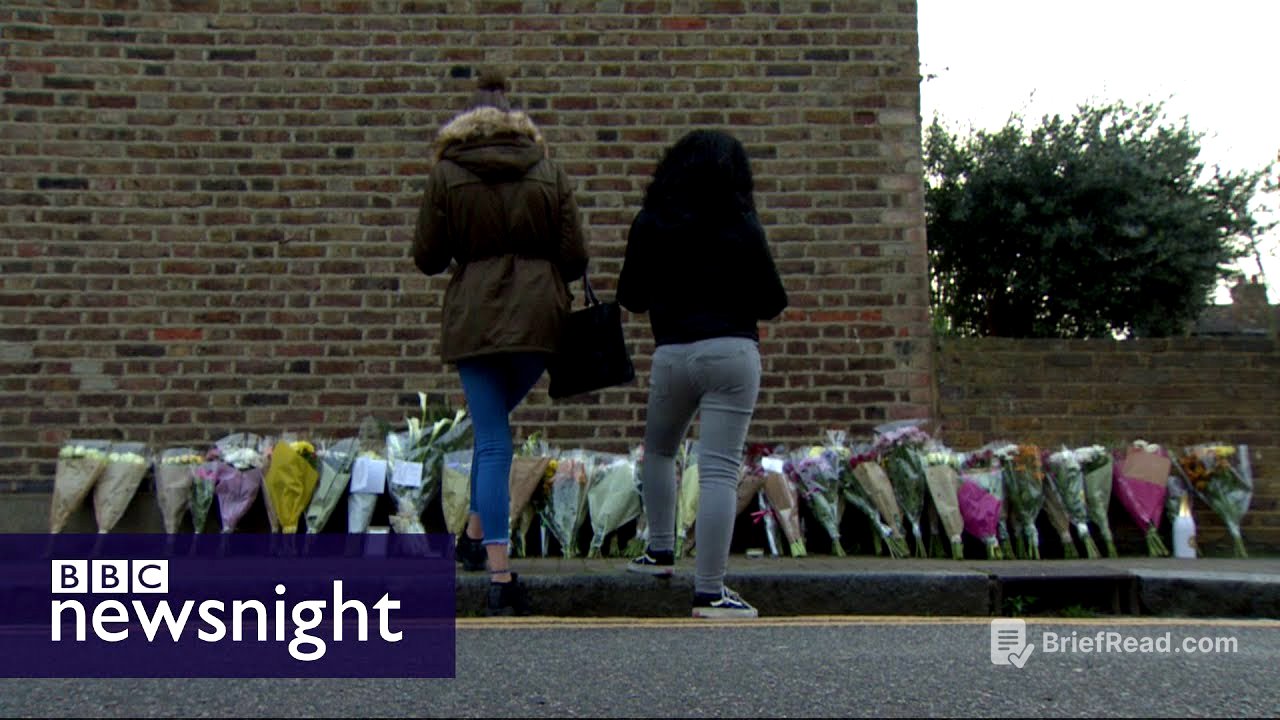
The report opens with the grim reality of knife crime in London, marking the 35th death this year due to such violence. Authorities are struggling to find effective policies to combat this issue. Met Commissioner Cressida Dick suggests social media is a key factor, turning minor arguments into serious conflicts within minutes.
Social Media as a Catalyst [0:43]
An MP from Hackney expresses scepticism about blaming social media as the primary cause, arguing it's a symptom of deeper social, educational, and economic problems. Young people turn to gangs due to a lack of opportunities in wider society. Bobby Kasanga, who founded Hackney Wick FC, believes social media fuels violence by allowing gangs to post provocative videos, leading to retaliations and escalating conflicts. The instant spread of these videos and the ensuing comments create a "wildfire" effect, making minor incidents spiral out of control.
Comparing London to Glasgow [2:31]
The report considers Glasgow's success in reducing violent crime by treating it as a public health issue. However, an academic points out key differences, particularly the racial dimension present in London's knife crime, which is historically absent in Glasgow. Addressing violence in London requires a multi-agency response that includes building trust between the police and communities, ensuring the response isn't perceived as a punitive reaction to racial issues.
Community Engagement and Solutions [3:35]
Bobby Kasanga highlights the widespread mistrust of the police among young men in Hackney. He suggests increased police visibility as a deterrent and emphasises the importance of keeping young people engaged in positive activities. Providing funding for activities like football throughout the week would give them constructive alternatives and reduce their exposure to negative influences.