TLDR;
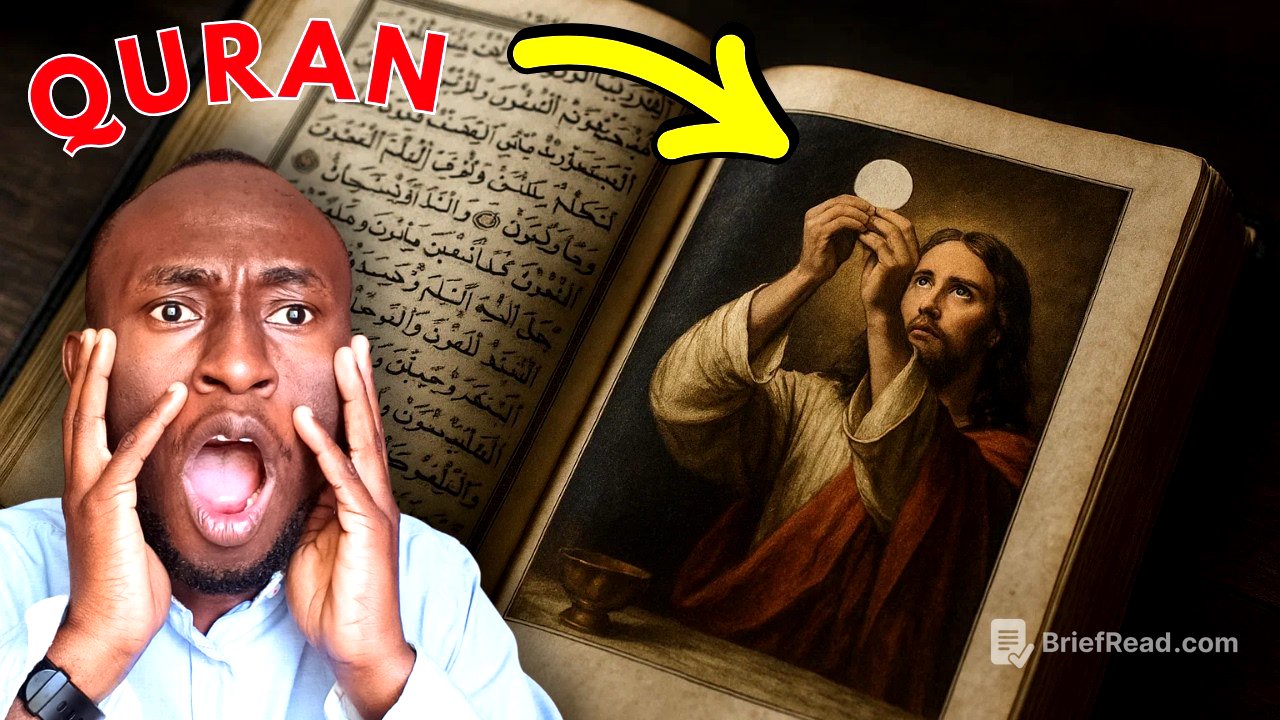
This video explores surprising parallels between the Quran and the Catholic Eucharist, arguing that the Quran, despite denying Jesus' divinity, unintentionally affirms the real presence of Christ in the Eucharist. It examines Quranic verses about a heavenly table and Jesus breathing life into clay, comparing them to Catholic beliefs about the Eucharist and the consecration. The video also discusses the significance of John 6, where Jesus speaks about eating his flesh and drinking his blood, and how the early Church understood the Eucharist.
- The Quran contains verses that echo the Catholic belief in the real presence of Christ in the Eucharist.
- Jesus's actions in the Quran, such as breathing life into clay, foreshadow the transformative power of the Eucharist.
- John 6 is central to Catholic Eucharistic theology, and the early Church believed in the real presence of Christ in the Eucharist.
A Surprising Link Between the Quran and the Eucharist [0:00]
The video introduces the idea that the Quran, despite differing theological views, surprisingly aligns with the Catholic belief in the real presence of Christ in the Eucharist. It states that the Quran unintentionally affirms this radical claim, not by denying it, but by strangely echoing it. The video outlines its plan to explore Quranic verses that parallel Catholic beliefs about the Mass, challenging both Muslims and non-Catholics to reconsider Jesus's statement, "This is my body." The video emphasises that the intention is not to criticise Islam, but to reveal a deeper connection. It highlights a Quranic passage where Jesus requests a heavenly table of food for his disciples, which would serve as a sign for all time, and previews the topics to be covered, including the Last Supper account in the Quran, Jesus's power in the Quran, John 6, and the early Church's understanding of the Eucharist.
The Real Presence: Too Radical for Many [1:49]
The video addresses the radical nature of the concept that Jesus could offer his actual flesh and blood as food, noting that this idea was so challenging that many of Jesus's disciples abandoned him when he first said it. It explains that while many Muslims and Protestants view this idea as blasphemous or symbolic, the Catholic Church firmly believes that during every valid Mass, the bread and wine truly become the body and blood of Christ, a concept known as the real presence.
The “Heavenly Table” in Surah 5 [2:20]
The video explores a passage in Surah 5:112-115 of the Quran, where Jesus's disciples ask him if God can send down a table spread with food from heaven. Jesus responds by warning them about demanding signs but then prays for the table to be sent down as a festival and a sign. The Quran confirms that God sends the table, warning those who disbelieve after receiving it. The video highlights that this is the only mention of a heavenly table in the Quran, and it is described as a sign for all time. The video then draws a parallel to the Catholic Eucharist, which it describes as a representation of Christ's sacrifice where heaven touches earth, with the altar symbolising the table of the Lord and the sign continuing.
Jesus Breathing Life into Clay (Surah 3;49) [3:41]
The video discusses how the Quran describes Jesus performing a unique miracle: breathing life into clay. It references Surah 3:49 and Surah 5:110, where Jesus forms a bird from clay, breathes into it, and it becomes a living bird by Allah's permission. The video draws a parallel to the Genesis account of God forming man from dust and breathing life into him, suggesting that Jesus's act places him in a unique category. It then connects this to the Catholic Mass, where the priest, acting in persona Christi, speaks the words of Christ ("This is my body"), transforming the bread and wine into the body, blood, soul, and divinity of Christ. The video emphasises that the Quran never denies Jesus's power to create life from matter, heal, and raise the dead, which aligns with the Catholic belief in the transformative power of the Eucharist.
John 6: The Hard Saying That Divided Disciples [5:26]
The video emphasises the importance of John 6, where Jesus claims to be the living bread come down from heaven, stating that those who eat of this bread will live forever, and that the bread he will give for the life of the world is his flesh. It notes that when the crowd argues, Jesus doubles down, insisting that unless they eat his flesh and drink his blood, they have no life in them. The video highlights that this teaching was so difficult that many disciples left, and Jesus did not call them back. It contrasts this with the Quran, which never addresses, quotes, or refutes this passage, despite mentioning Jesus and Mary extensively. The video asserts that this passage is central to Catholic Eucharistic theology, with the Catechism teaching that the Eucharist is the source and summit of the Christian life.
“My Lord and My God”: The Eucharist as Divine Encounter [6:52]
The video explains that the Eucharist is not merely symbolic but a divine encounter. It references the Catechism's teaching that in the presence of Jesus Christ, hidden under the appearance of bread and wine, Catholics are moved to affirm, "My Lord and my God." The video emphasises that the same Jesus who spoke in John 6 speaks at every Mass through the priest, and the same Jesus who fed the crowd gives himself in the Eucharist.
Did the Early Church Believe This? (Spoiler: Yes) [7:28]
The video addresses the question of whether early Christians believed in the real presence of Christ in the Eucharist or if it was a later invention. It cites St. Ignatius of Antioch, writing in 107 AD, who warned against those who abstain from the Eucharist because they do not confess that it is the flesh of Jesus Christ. It also quotes St. Cyril of Jerusalem in the 4th century, who taught catechumens to approach the Eucharist believing it to be the body and blood of Christ. The video asserts that this belief was widespread and received, not debated. It also references St. John Paul II's teaching that the Eucharist reinforces the unity of the Church and St. Paul's warning against profaning the body and blood of the Lord by receiving the Eucharist unworthily.
Addressing Objections: Respect, Truth, and Invitation [8:53]
The video addresses potential objections, clarifying that it is not claiming the Quran is divinely inspired or that Muslims understand these passages in the same way as Catholics. It emphasises that when the Quran speaks truth about Jesus, even partially, it points beyond itself. The video reiterates that the intention is to speak with respect and invites Muslims to consider the parallels between the Quran and Catholic beliefs about the Eucharist.
Your Next Step: Encounter Christ in the Eucharist [10:21]
The video concludes by reiterating that the Catholic Eucharist is not a medieval invention, a metaphor, or an optional devotion, but the source and summit of the Christian life. It summarises the points made throughout the video, including the Quran's portrayal of Jesus, Jesus's words in John 6, the early Church's understanding of the Eucharist, and the heavenly table requested by Jesus's disciples in the Quran. The video encourages viewers to read John 6, attend a weekday Mass, kneel during the consecration, and spend time in silence after communion to encounter Christ in the Eucharist.