TLDR;
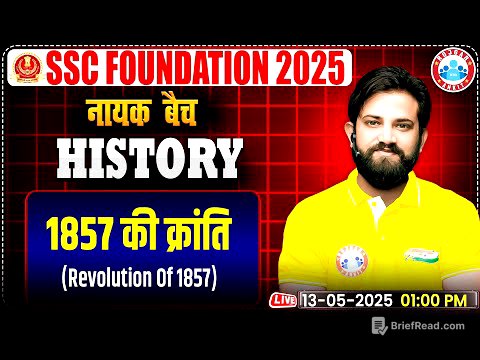
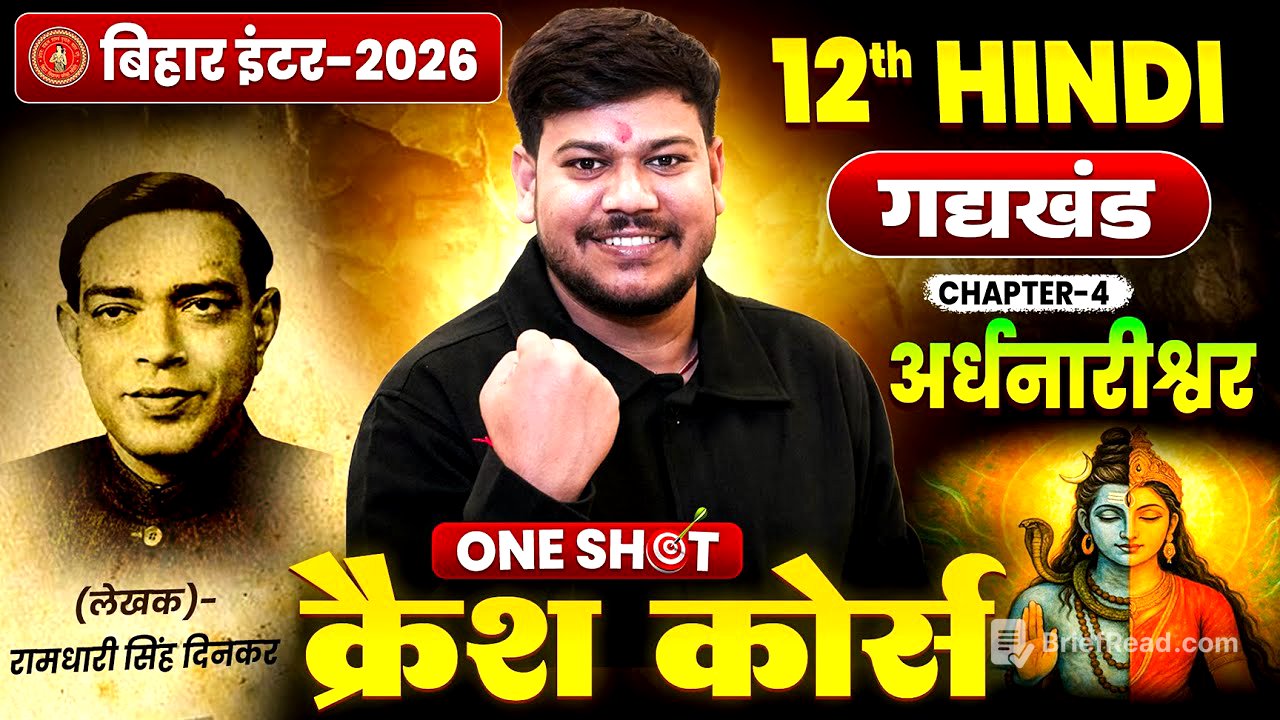
Namaste doston! This video is a crash course on Chapter 4, "Ardhanarishwar," from the Class 12th Hindi prose section. Sir discusses the importance of hard work, announces updates regarding notes for full batch students and a formula book for math students. He also talks about the chapter, its writer Ramdhari Singh Dinkar, and important points for the upcoming exams, including objective and subjective questions.
- Notes for full batch students are ready and will be available soon.
- A formula book for Class 12th math students is coming soon.
- The chapter "Ardhanarishwar" is a निबंध (essay) and discusses the balance between male and female energies.
Introduction [0:00]
Namaste students! Sir apologizes for the delay due to internet issues. He acknowledges the students who have joined the live class. He asks students to show their enthusiasm in the comment box with hearts and fire emojis if they can see and hear him clearly. The class starts at 9:30 PM, after everyone else is asleep.
Crash Course Chapter-4 अर्धनारीश्वर [1:18]
Sir announces that they are on Chapter 4, "Ardhanarishwar," which is the most important and interesting chapter in Class 12th Hindi. This is a one-shot crash course chapter. The author of this chapter is Ramdhari Singh Dinkar.
Motivation line [2:01]
Sir shares a motivational line: "Kaam se bada koi dharm nahi hota, aur mehnat se bada koi karm nahi hota." Meaning, work is the biggest religion, and hard work is the biggest deed. He mentions that this class will complete 10 classes of the crash course, which means 25% of the syllabus will be covered.
Update-1 [3:59]
Sir requests students to share the session with their friends as he is about to give two important updates. He asks students about their "josh" (enthusiasm) in the class. The first update is for full batch students: the complete Hindi notes are ready and will be available by tomorrow morning or evening. Earlier, only six chapters of गद्य खंड (prose) and काव्य खंड (poetry) had notes, but now all 13 chapters each have notes.
Formula Book [6:44]
The second update is for Class 12th math students. Sir has prepared "The Formula Book" with important formulas, chapter-wise, type-wise, and topic-wise. He says that सूत्र (formulas) are the soul of mathematics. About 30 objective questions in the exam are based on formulas. The book includes formulas from Class 11th as well. This formula book will also be available soon.
Update-2 [8:10]
Sir mentions that in the next 5-7 days, students will get Hindi practice sets, followed by math practice sets. The formula book is 10 pages long, which can be printed on five pages (if printed on both sides) for ₹15.
अर्धनारीश्वर(निबंध) [10:22]
Sir starts the chapter "Ardhanarishwar," which is a निबंध (essay). The chapter discusses that नर (men) and नारियां (women) are made of the same मिट्टी (soil). Every पुरुष (man) has स्त्री (woman) qualities, and every स्त्री (woman) has पुरुष (man) qualities. That's why every पुरुष (man) is called अर्धनारीश्वर (half man, half woman). The chapter also discusses when स्त्रियां (women) became पराधीन (dependent) and what different विद्वानों (scholars) have said about स्त्री (women) and पुरुष (men).
लेखक परिचय [13:12]
Sir introduces the writer, Ramdhari Singh Dinkar, who is a राष्ट्रीय कवि (national poet) from Bihar. His जन्म (birth) was on 23 September 1908, in the village Simaria, district Begusarai, Bihar. His निधन (death) was on 24 April 1974, in Chennai, Tamil Nadu. His mother's name was Manroop Devi, father's name was Ravi Singh, and पत्नी (wife)'s name was Shyamavati Devi. He passed मैट्रिक (matriculation) in 1928 from Mokama Ghat Railway High School, inter in 1930 from Langton Singh College, Munger, and BA in 1932 in इतिहास (history) from Patna College, Patna. He was the प्रधानाध्यापक (headmaster) of HE School, Barbigha, and a हिंदी (Hindi) professor in the जनसंपर्क विभाग (Public Relations Department) and Bihar Vidyalaya.
महत्वपूर्ण जानकारी [24:42]
In 1925, his first कविता (poem) was published in "Chhatra Sahodar." At the age of 21, his first कविता पुस्तक (poetry book), "Pranbhang," was published. Important works include Pranbhang, Renuka, Hunkar, Raswanti, and Kurukshetra. He received the ज्ञानपीठ पुरस्कार (Jnanpith Award) for "Urvashi." His stories include "Mitti Ki Ore," "Ardhanarishwar," "Sanskriti Ke Char Adhyay," and "Kavya Ki Bhumika." "Ardhanarishwar" was written in 1952. He received the साहित्य अकादमी पुरस्कार (Sahitya Akademi Award) for "Sanskriti Ke Char Adhyay." He was also a राज्यसभा (Rajya Sabha) सांसद (MP) and was honored with पद्म भूषण (Padma Bhushan). He is known as राष्ट्रकवि (national poet).
पाठ का सारांश [29:26]
"Ardhanarishwar" is an essay by Ramdhari Singh Dinkar. Ardhanarishwar is a कल्पित रूप (imaginary form) of भगवान शिव (Lord Shiva) and माता पार्वती (Goddess Parvati), with half the body as पुरुष (male) and half as स्त्री (female). नर (men) and नारी (women) are समान (equal). Men suppress the स्त्री (female) qualities within themselves, and women suppress the पुरुष (male) qualities. The पराधीनता (dependence) of नारी (women) started when मानव जाति (humanity) invented कृषि (agriculture). Men consider स्त्री (women) only as a source of आनंद (pleasure) and त्याग (abandon) them after आनंदित (enjoying). Then, महावीर (Mahavir) and भगवान बुद्ध (Lord Buddha) give them the अधिकार (right) to become भिक्षुणी (nun). नारी (women) are not a बाधा (hindrance) for पुरुष (men) but a शक्ति (power). Premchand said that when पुरुष (men) take the गुण (qualities) of नारी (women), they become देवता (gods), and when स्त्री (women) take the गुण (qualities) of पुरुष (men), they become राक्षसी (demons). नर (men) and नारी (women) are two images cast from the same mold. If the संधि (negotiation) in the Kaurava सभा (assembly) had happened between कुंती (Kunti) and गांधारी (Gandhari) instead of कृष्ण (Krishna) and दुर्योधन (Duryodhana), the महाभारत (Mahabharata) युद्ध (war) would have stopped.
वस्तुनिष्ठ प्रश्न [36:37]
Sir discusses objective questions from the chapter:
- Ardhanarishwar is a form of: Shiv and Parvati.
- Dinkar ji was born in: Begusarai, Simaria.
- Ramdhari Singh Dinkar was born in: 1908.
- Dinkar ji died in: 1974.
- Dinkar ji received the Jnanpith Award for: Urvashi.
- Ardhanarishwar is a रचना (creation) of: Dinkar.
- Which रचनाकार (writer) is from Bihar? Ramdhari Singh Dinkar.
- Which रचना (creation) is by Ramdhari Singh Dinkar? Ardhanarishwar.
- Dinkar ji received the Sahitya Akademi Award for: Sanskriti ke Char Adhyay.
- Ardhanarishwar is a: Nibandh (essay).
- Gandhari was the mother of: Duryodhana.
- Sanskriti ke Char Adhyay is a कृति (work) of: Ramdhari Singh Dinkar.
- Which रचना (creation) is by Premchand? Poos ki Raat.
- Which काव्य कृति (poetic work) is written on युद्ध (war) and शांति (peace)? Kurukshetra.
- Which पुरस्कार (award) was given to Dinkar ji? Padma Bhushan.
- "नारी और नर एक ही द्रव की ढली दो प्रतिमाएं हैं" (Nari aur nar ek hi drav ki dhali do pratimaen hain) - This line is from: Ramdhari Singh Dinkar.
- The writer of Ardhanarishwar is: Ramdhari Singh Dinkar.
- Ardhanarishwar is a कल्पित रूप (imaginary form) of: Shankar and Parvati.
- Which रचना (creation) is honored with the Jnanpith Award? Urvashi.
- Ramdhari Singh Dinkar was the उपकुलपति (Vice-Chancellor) of which विश्वविद्यालय (university)? Bhagalpur University.
- In the Ardhanarishwar निबंध (essay), Shankar and Parvati are depicted in which form? Kalpit (imaginary).
- Who said, "नारी स्वपन है, नारी सुगंध है, नारी पुरुष की बाह पर झूलती हुई जूही की माला है"? (Nari swapan hai, nari sugandh hai, nari purush ki baah par jhoolti hui juhi ki mala hai) - Ramdhari Singh Dinkar.
- What was the name of Ramdhari Singh Dinkar's father? Ravi Singh.
- Which of the following is a रचना (creation) of Ramdhari Singh Dinkar? Urvashi.
- "नारी तो हमहू करी तब ना किया विचार" (Nari to humhu kari tab na kiya vichar) - This line is from which पाठ (lesson)? Ardhanarishwar.
- Who among the following has been on the पद (position) of उपकुलपति (Vice-Chancellor) in Bhagalpur University? Ramdhari Singh Dinkar.
- "पराधीनता के कारण नारी अपने अस्तित्व की अधिकारिणी नहीं रही" (Paradhinta ke karan nari apne astitva ki adhikarini nahi rahi) - This statement is from which शीर्षक पाठ (title lesson)? Ardhanarishwar.
- "आनंद मैंने जो धर्म चलाया था" (Anand maine jo dharm chalaya tha) - This statement is from which शीर्षक पाठ (title lesson)? Ardhanarishwar.
- "परशुराम की प्रतीक्षा" (Parshuram ki Pratiksha) शीर्षक काव्यकृति (title poetic work) is a रचना (creation) of whom? Ramdhari Singh Dinkar.
लघु उत्तरीय प्रश्न [45:07]
Sir discusses short answer type questions:
- If the संधि (negotiation) had happened between कुंती (Kunti) and गांधारी (Gandhari), the महाभारत (Mahabharata) might not have happened. Why? Because कुंती (Kunti) and गांधारी (Gandhari) were स्वभाव से कोमल (naturally gentle).
- Why was the कल्पना (imagination) of अर्धनारेश्वर (Ardhanarishwar) done? What is its सार्थकता (significance) today? It was done to show समन्वय (coordination) between शिव (Shiva) and शक्ति (Shakti).
- What is प्रवृत्ति मार्ग (Pravritti Marg) and निवृत्ति मार्ग (Nivritti Marg)? These are both बौद्ध धर्म (Buddhism) paths. प्रवृत्ति मार्ग (Pravritti Marg) वाले (followers) made भोग विलास (pleasure) the आधार (base) of life, while निवृत्ति मार्ग (Nivritti Marg) वाले (followers) started भागने (running away) from the छाया (shadow) of नारियों (women).
- What did बुद्ध (Buddha) say to आनंद (Anand)? बुद्ध (Buddha) said to आनंद (Anand) that his धर्म (religion) was supposed to last for 5000 years, but now it will only last for 500 years because of allowing नारियों (women) to become भिक्षुणी (nuns).
- When did the पराधीनता (dependence) of नारी (women) start? The पराधीनता (dependence) of नारी (women) started in the कृषि काल (agricultural era).
- जिसे भी पुरुष अपना कर्म क्षेत्र मानता है वह नारी का भी कर्म क्षेत्र है (Jise bhi purush apna karm kshetra manta hai vah nari ka bhi karm kshetra hai) - Whatever कर्म क्षेत्र (field of work) पुरुष (men) consider theirs, is also the कर्म क्षेत्र (field of work) of नारी (women).
- नारी और नर एक ही द्रव की ढली दो प्रतिमाएं हैं (Nari aur nar ek hi drav ki dhali do pratimaen hain) - How? Because both have a similar बनावट (structure).
- What are बरनार्ड शॉ (Bernard Shaw)'s विचार (thoughts) about नारी (women)? बरनार्ड शॉ (Bernard Shaw) has माना (considered) नारी (women) as अहेरण (a trap) and told नर (men) to बचकर रहने (stay away) from नारियों (women).
- Why did बुद्ध (Buddha) have to give अनुमति (permission) to नारियों (women) to enter बौद्ध धर्म (Buddhism)? Because he wanted महिलाएं (women) to also पा सके (attain) मोक्ष (salvation).
- What are स्त्रियोचित गुण (striyochit gun)? स्त्रियोचित गुण (striyochit gun) means स्त्री (women) are known for their कोमल स्वभाव (gentle nature).
- What are पुरुष के गुण (purush ke gun)? पुरुष (men) are known for पुरुषार्थ (manliness).
- पुरुष जब नारी के गुण लेता है तब वह क्या बन जाता है (Purush jab nari ke gun leta hai tab vah kya ban jata hai)? Premchand says that when पुरुष (men) take the गुण (qualities) of नारी (women), they become देवता (gods).
दीर्घ उत्तरीय प्रश्न [57:43]
Sir discusses long answer type questions:
- Explain the भावार्थ (meaning) of the lines: "नारी तो हमहू करी तब ना किया विचार" (Nari to humhu kari tab na kiya vichar). These lines are from the अर्धनारेश्वर (Ardhanarishwar) पाठ (lesson) by कबीर दास जी (Kabir Das ji), who says that he married नारी (women) without thinking, and now she seems like a भारी बोझ (heavy burden).
- Why is दिनकर जी (Dinkar ji) असंतुष्ट (dissatisfied) with the चिंतन (thoughts) of रविंद्रनाथ (Ravindranath), प्रसाद (Prasad), and प्रेमचंद (Premchand) in the अर्धनारेश्वर (Ardhanarishwar) शीर्षक निबंध पाठ (title essay lesson)? Because रविंद्रनाथ (Ravindranath) says that the असली खूबी (real quality) of नारी (women) is in her सुंदरता (beauty), so what will she do by taking शिक्षा (education)? प्रसाद जी (Prasad ji) says that स्त्री (women) should be kept दूर (away) from the काम (work) of पुरुषों (men). प्रेमचंद जी (Premchand ji) says that when पुरुष (men) take the गुण (qualities) of नारी (women), they become देवता (gods), but when स्त्री (women) take the गुण (qualities) of पुरुष (men), they become राक्षसी (demons).
सप्रसंग व्याख्या [1:02:28]
Sir explains सप्रसंग व्याख्या (contextual explanation):
- "प्रत्येक पत्नी अपने पति को बहुत कुछ उसी दृष्टि से देखती है जिस दृष्टि से लता अपने वृक्ष को" (Pratyek patni apne pati ko bahut kuch usi drishti se dekhti hai jis drishti se lata apne vriksh ko) - This line is from the अर्धनारेश्वर (Ardhanarishwar) शीर्षक निबंध (title essay) by रामधारी सिंह दिनकर (Ramdhari Singh Dinkar). The लेखक (writer) wants to say that पत्नी (wife) depends on her पति (husband) just like लता (creeper) depends on वृक्ष (tree).
- "जिस पुरुष में नारीत्व नहीं अपूर्ण है" (Jis purush mein naritva nahi apurn hai) - This line is from the अर्धनारेश्वर (Ardhanarishwar) शीर्षक निबंध (title essay) by रामधारी सिंह दिनकर (Ramdhari Singh Dinkar). The लेखक (writer) wants to say that पुरुष (men) are known for पुरुषार्थ (manliness), and स्त्री (women) are known for their कोमल स्वभाव (gentle nature), but a पुरुष (man) is अपूर्ण (incomplete) without the गुण (qualities) of नारी (women).
- "नर और मादा पशुओं में भी थे और पक्षियों में भी। किंतु पशुओं और पक्षियों ने अपनी मादाओं पर आर्थिक पर आर्थिक प्रवस्था नहीं लादी। लेकिन मनुष्य की मादा पर यह प्राधीनता आपसे लद गई" (Nar aur mada pashuon mein bhi the aur pakshiyon mein bhi. Kintu pashuon aur pakshiyon ne apni madaon par arthik par arthik pravastha nahi ladi. Lekin manushya ki mada par yah pradhinta aapse lad gayi) - This line is from the अर्धनारेश्वर (Ardhanarishwar) शीर्षक निबंध (title essay) by रामधारी सिंह दिनकर (Ramdhari Singh Dinkar). The लेखक (writer) wants to say that today, नारी (women) are खो रही (losing) their अस्तित्व (existence) due to प्राधीनता (dependence).
- "इसी प्रकार पुरुष भी स्त्री उचित गुणों को अपनाकर समाज में स्त्रेव कहलाने से घबराता है" (Isi prakar purush bhi stri uchit gunon ko apnakar samaj mein strev kahalane se ghabrata hai) - This line is from the अर्धनारेश्वर (Ardhanarishwar) शीर्षक निबंध (title essay) by रामधारी सिंह दिनकर (Ramdhari Singh Dinkar). The लेखक (writer) wants to say that just like स्त्री (women) कतराती (hesitate) to learn the गुण (qualities) of पुरुष (men), similarly, पुरुष (men) घबराते (hesitate) to be called स्त्रेव (effeminate) by adopting the स्त्री उचित गुण (qualities appropriate for women).
Sentup Exam [1:10:06]
Sir asks students if they want preparation for the setup exam. He plans to focus on the syllabus and finish it quickly. He will teach for the setup exam on the 20th, and there will be a holiday for two days for preparation. The main focus is on the board exam.
Thank you [1:13:20]
Sir says bye and love you to everyone. Notes will be available by tomorrow. He asks students who haven't taken admission on the app to do so, as the notes will be available there.