TLDR;
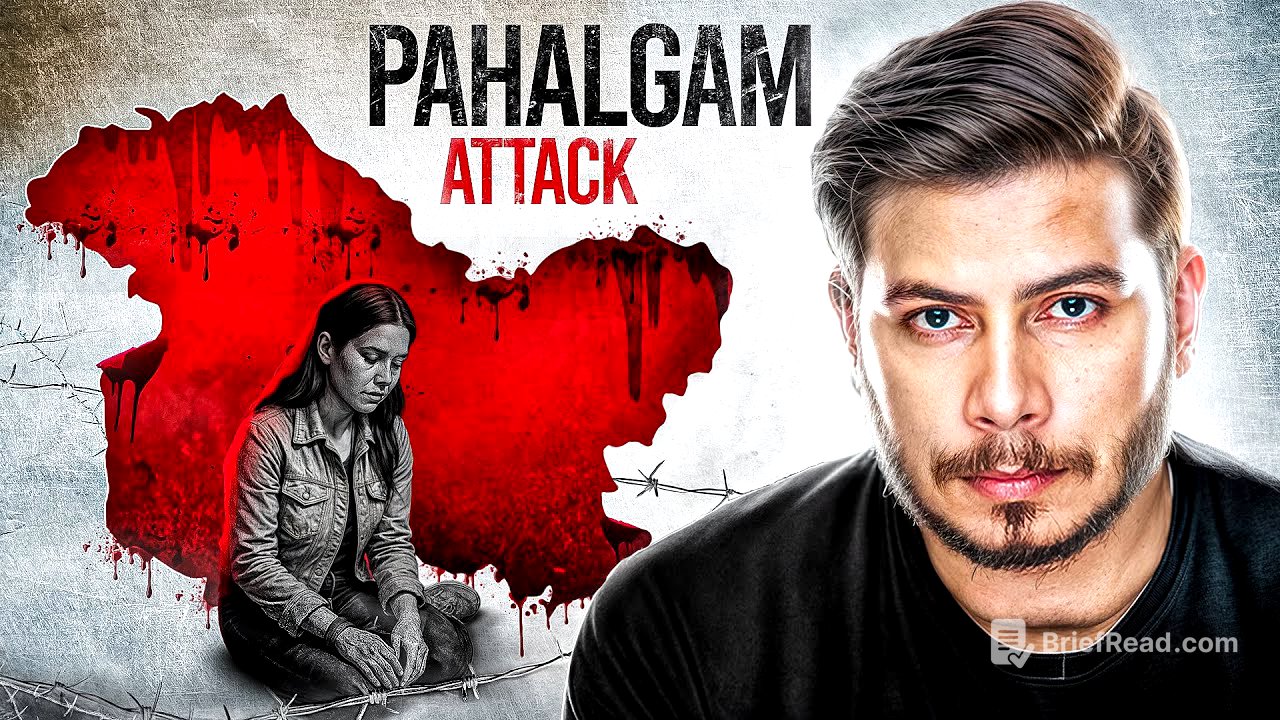
This video by Nitish Rajput talks about the detailed planning and execution of the Pahalgam attack. It highlights the involvement of Pakistani terrorists, the formation of The Resistance Front (TRF), and the use of advanced technology to carry out the attack. The video also touches upon the international connections and the aftermath of the attack, including the ongoing search operations.
- Pakistani terrorists were involved in the Pahalgam attack.
- The Resistance Front (TRF) was formed to carry out attacks in Kashmir.
- Advanced technology was used to plan and execute the attack.
Intro [0:00]
The video starts by highlighting that the terrorists involved in the Pahalgam attack are still at large. It mentions that one of the attackers was identified as a Pakistani Army SSG Para Commando. The video also refers to selfies taken by the terrorists with the dead bodies after the attack. It further mentions that the location of the attack was changed to Pahalgam.
Dermatouch Advertisement [1:24]
Before diving into the details of the attack, the video includes an advertisement for Dermatouch's Salicylic 2% face wash, which is recommended for oily skin and acne problems. It contains BHA, which controls oil and Zinc PCA, which keeps the skin hydrated. The product is available on their website and other platforms.
Background of Pahalgam Attack [2:42]
The video then shifts back to the topic, providing background information on Pahalgam and Baisaran, also known as "Mini Switzerland". It emphasizes that the attack was well-coordinated, involving multiple groups and advanced technologies. The video promises to reveal the planning and execution of the attack, including evidence of Pakistani involvement.
Adil Hussain Thoker: The First Terrorist [3:29]
The video introduces Adil Hussain Thoker, identified as the first terrorist involved in the Pahalgam attack. It recounts his early life, education, and gradual involvement in anti-national activities. In April 2018, he left home under the pretext of an exam and never returned, eventually applying for a student visa to Pakistan.
Training in Pakistan and FATF [5:39]
After reaching Pakistan, Adil Thoker joined Lashkar-e-Taiba (LeT) and underwent training in Muzaffarabad. Meanwhile, Pakistan faced scrutiny from the Financial Action Task Force (FATF) for terror funding. To show compliance, Pakistan took minor actions against LeT. The Pulwama attack further intensified pressure on Pakistan, leading to warnings from FATF.
Formation of The Resistance Front (TRF) [7:51]
Following the revocation of Article 370, Pakistan formed a new terrorist outfit called The Resistance Front (TRF) to continue operations in Kashmir. TRF was designed to appear as a local group, but it was run by existing terrorist organizations like LeT and Jaish-e-Mohammad. The goal was to maintain the same activities under a different name.
Key Figures in TRF: Hashim Musa and Others [9:19]
The video highlights the recruitment process for TRF, including the addition of members from various militant groups. A key figure mentioned is Hashim Musa, a Pakistan Army SSG Para Commando, who was "loaned" to Lashkar-e-Taiba. The video emphasizes that this information is based on NIA investigations and reports from various news outlets.
International Reports on Pakistan's Involvement in Terrorism [10:40]
The video presents evidence from international organizations, such as the United Nations, US State Department, and Congressional Research Service (CRS), that confirm Pakistan's support for terrorist groups operating in Kashmir. These reports highlight the financial and strategic assistance provided by the Pakistan Army and ISI to these groups.
Pakistan's Acknowledgment of Supporting Militants [12:43]
The video includes statements from former Pakistani leaders, such as Musharraf and Nawaz Sharif, acknowledging the country's involvement in training militants and using non-state actors for attacks in Kashmir. It also shows a photo of Pakistani leaders with a UN-designated terrorist, Hafiz Abdul Rauf.
TRF Leadership and OGW Network [14:00]
The video discusses the appointment of Mohammad Abbas Sheikh as the head of TRF and Sheikh Sajjad Gul's involvement in planning the Pahalgam attack. It also explains the role of Farooq Ahmad in managing TRF's Over Ground Worker (OGW) network, which helps terrorists cross the LoC and provides support in Kashmir.
TRF's Activities and Changing Situation in Kashmir [17:23]
The video details TRF's rebranding of terrorism, use of social media, and initial attacks on non-locals. It also notes the changing situation in Kashmir, including a decrease in stone pelting and terrorist activities, an increase in tourism and investment, and the implementation of the domicile law. TRF aimed to disrupt this progress by attacking tourists and non-locals.
Entry of Hashim Musa and Adil Thoker into Kashmir [19:48]
In September 2023, Hashim Musa and Ali Bhai, both Pakistani citizens, entered Kashmir. Adil Thoker, after completing his training in Pakistan, also entered Kashmir in October 2024. They carried out attacks on non-local laborers and were involved in various incidents across Kashmir.
Recovery of Junaid Ahmed Bhat's Mobile and M4 Rifles [21:43]
The video mentions the recovery of a mobile phone from a killed terrorist, Junaid Ahmed Bhat, which revealed connections with Pakistan. The phone contained an image that later helped identify Musa. The video also discusses the use of American M4 rifles in the Pahalgam attack, which were smuggled into Kashmir after the US withdrawal from Afghanistan.
Hamas Connection and Increased Demand for Satellite Images [23:50]
The video highlights a meeting between a Lashkar-e-Taiba leader and a Hamas leader in Qatar. It also notes the visit of Hamas leaders to POK and the subsequent "Kashmir Solidarity and Hamas Operation Al Aqsa Flood Conference." Following these events, there was a sudden surge in demand for high-resolution satellite images of the Pahalgam region.
Pakistani Company BSI and Access to Satellite Images [26:26]
A Pakistani company, Business System Intelligence Pvt. Ltd. (BSI), partnered with a US satellite company, Maxar Technologies, gaining access to high-resolution satellite images. The founder of BSI had a history of illegally exporting sensitive technology from the US to Pakistan's Atomic Energy Commission. This raised concerns about the potential misuse of satellite images by terrorist organizations.
Planning and Communication Using Ultra Sets [27:57]
The video discusses the planning of the Pahalgam attack, which likely occurred in March 2025. The terrorists used "ultra sets" for communication, which are upgraded smartphones with internal satellite antennas that bypass Indian surveillance by routing signals through Chinese satellites and Pakistani servers. This made their communication untraceable.
Navigation and Target Selection [30:56]
For navigation, the terrorists used the Alpine Quest app with high-resolution satellite images. They initially planned to attack luxury hotels near Zabarwan Valley but later changed the target to Baisaran Valley in Pahalgam due to its lack of security and high tourist footfall. The date of the attack was fixed to coincide with the US Vice President's visit to India.
Execution of the Pahalgam Attack [36:37]
On April 21st, Musa and Ali Bhai moved towards Baisaran Valley. On April 22nd, the terrorists entered Baisaran Valley, blocked the entry-exit points, and surrounded the tourists. They separated men and women, asked about Hindus, and shot the Hindu tourists at close range. They also killed a pony rider who tried to intervene. The terrorists recorded the attack and took selfies with the victims.
Aftermath and Investigation [42:13]
After the attack, TRF claimed responsibility. The United Nations Security Council issued a press statement, but Pakistan opposed the inclusion of TRF's name. The search operation is still ongoing, but Musa, Ali Bhai, and Adil Thoker remain at large. The video concludes with a reminder about Dermatouch’s Salicylic 2% Face Wash.