TLDR;
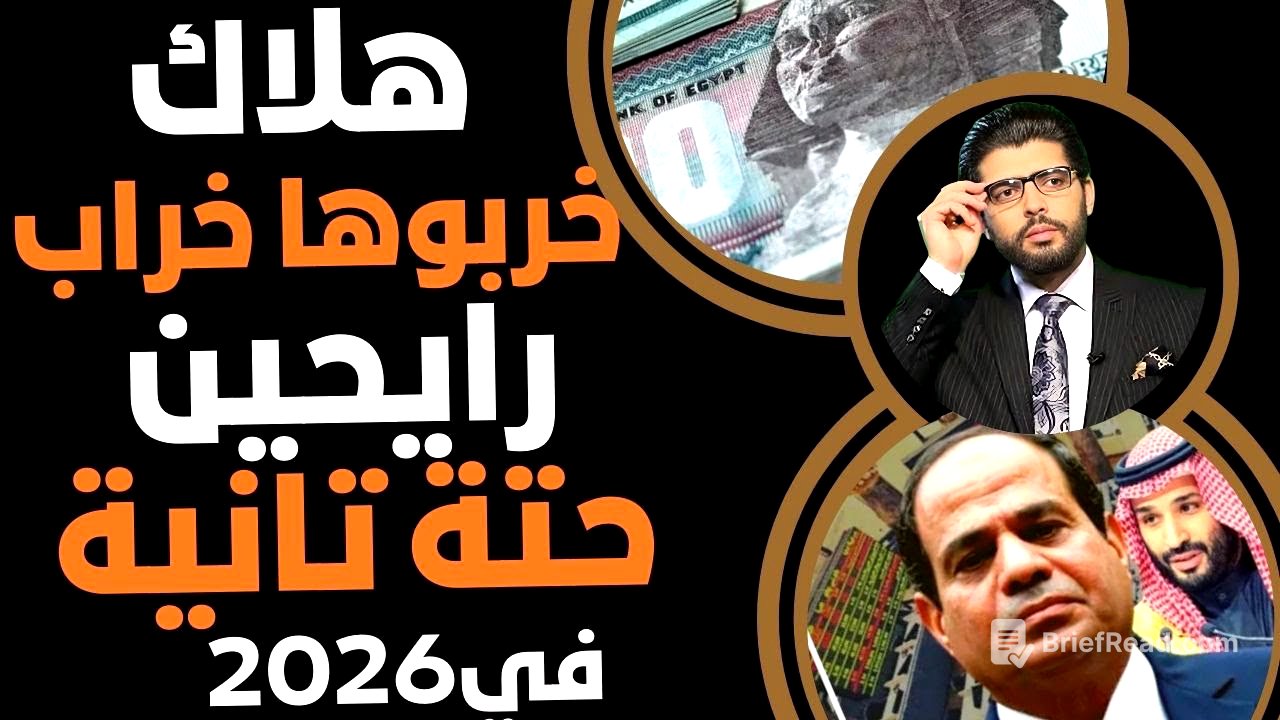
This YouTube video features Mohamed Mohi summarizing and commenting on a press conference by Dr. Madbouly regarding Egypt's economic situation, comparing it unfavorably to 2014. Mohi critiques the government's narrative, highlighting the increased cost of living, the burden on citizens, and the perceived disconnect between the government's claims and the reality experienced by ordinary Egyptians. He encourages viewers to share their memories of 2014 to counter the government's portrayal of that time.
- The government claims improvements since 2014, but Mohi argues the opposite.
- Mohi uses personal anecdotes and economic data to support his claims.
- He encourages viewers to share their memories of 2014 to counter the government's narrative.
Introduction and Sound Check [2:48]
Mohamed Mohi begins by ensuring the audio is working correctly after previous technical difficulties. He mentions a previous suspension due to discussing sensitive topics related to a plane crash and military personnel, emphasizing the restrictions on discussing certain geographical areas and subjects.
Dr. Madbouly's Press Conference and Initial Reactions [4:15]
Mohamed Mohi introduces a summary of a lengthy press conference by Dr. Madbouly about the current state of affairs in Egypt. He notes that while Dr. Madbouly addressed important issues, many people are dissatisfied with their current situation and are seeking better conditions. Dr. Madbouly claimed that without the current administration, Egyptians would be experiencing severe electricity shortages, similar to some other countries. He also stated that Egypt has overcome numerous challenges, including revolutions, wars, and economic hardships. Mohi expresses surprise at the tone of the conference, especially as 2025 is coming to an end, and questions whether Egyptians should welcome the new year with such rhetoric.
Critique of Economic Claims and Comparisons to 2014 [6:09]
Mohamed Mohi challenges Dr. Madbouly's claims, particularly the comparison to 2014. He questions whether 2014 or 2025 is worse, pointing out that electricity cuts also occurred in 2022 and 2023. He argues that the current dollar crisis was brought about by the current administration, not by previous ones. Mohi emphasizes that people remember the economic conditions of 2023, including the rising debt. He contrasts this with Dr. Madbouly's claim that the debt will be reduced to unprecedented levels.
The Government's Narrative vs. Reality [8:48]
Mohamed Mohi plays a clip of Dr. Madbouly discussing the government's awareness of citizens' concerns and the impact of reforms. Mohi questions why the government continues to implement policies that negatively affect citizens. He criticizes the strategy of continuous " ضرب ضرب ضرب ضرب" (hit, hit, hit, hit) and finds it strange that the government acknowledges causing hardship. Dr. Madbouly praises the Egyptian people for their understanding and resilience, hoping for a better future. Mohi then questions the purpose of the funds acquired through debt and criticizes the focus on 2014 when discussing the 2025 debt.
Nostalgia vs. Current Hardships [12:14]
Mohamed Mohi continues to dissect Dr. Madbouly's statements about 2014, highlighting the stark differences in living conditions compared to the present. He contrasts the affordability of basic goods like meat, vegetables, and cooking gas in 2014 with their current high prices. He argues that while Dr. Madbouly portrays 2014 as a time of crisis, many Egyptians remember it as a time when life was more manageable and affordable.
Personal Anecdotes and Economic Indicators of 2014 [18:43]
Mohamed Mohi shares personal anecdotes to illustrate the economic realities of 2014, such as the affordability of electricity, food, and entertainment. He contrasts this with the current situation, where basic necessities have become unaffordable for many. He emphasizes that the social and political context of 2014, including the conflict between political factions, did not overshadow the relative economic stability and affordability of daily life for ordinary citizens.
The Disconnect Between Government Metrics and Citizen Experience [27:45]
Mohamed Mohi criticizes the government's focus on macroeconomic indicators that do not reflect the daily struggles of ordinary Egyptians. He argues that citizens are more concerned with the price of basic goods, transportation, and clothing than with credit ratings and international classifications. He questions the cost of Dr. Madbouly's attire, implying a disconnect between the government's spending and the economic hardships faced by the population.
Contrasting Costs of Living: 2014 vs. Present [30:11]
Mohamed Mohi continues to compare the cost of living in 2014 with current prices, focusing on items like shoes and suits. He notes that the same quality of goods costs significantly more today due to inflation and economic policies. He also mentions that government officials often prefer to purchase luxury items from abroad, even when similar products are available locally.
Critique of Government Policies and Priorities [33:34]
Mohamed Mohi expresses frustration with the government's attempts to portray current conditions as better than those in 2014. He argues that the government's policies have led to increased hardship and that comparing the present to a supposedly worse past is insulting to citizens. He questions the government's priorities, such as building new roads that primarily benefit the wealthy, while neglecting the basic needs of the majority of the population.
Economic Hardships and Social Changes [34:59]
Mohamed Mohi discusses the economic hardships faced by ordinary Egyptians, such as the increased cost of clothing, transportation, and basic necessities. He contrasts this with the relative affordability of these items in 2014. He also notes the social changes that have occurred, such as the decline in marriage rates and the increase in divorce rates, which he attributes to economic pressures.
Government's Claims vs. Reality: Electricity and Infrastructure [48:08]
Mohamed Mohi challenges Dr. Madbouly's claims about improvements in electricity supply and infrastructure since 2014. He points out that electricity cuts still occur and that the government has imposed restrictions on electricity usage in government offices. He questions the need for new power plants if the existing infrastructure was sufficient and criticizes the sale of existing power plants to foreign entities.
The Dollar Crisis and Economic Policies [1:01:55]
Mohamed Mohi questions Dr. Madbouly's claim that the government has successfully addressed the dollar crisis. He asks who created the crisis in the first place and who should be held accountable for it. He contrasts the current situation with 2014, when there was more dollar liquidity in the country. He also criticizes the government's reliance on selling assets to address economic problems.
Social Welfare and Living Conditions [1:09:55]
Mohamed Mohi criticizes the government's claim that it has improved living conditions for ordinary Egyptians. He questions whether citizens are better off today than they were in 2014 in terms of income, access to healthcare, and education. He also challenges the government's narrative about building a modern state, arguing that many Egyptians are struggling to make ends meet.
Housing and Infrastructure [1:14:02]
Mohamed Mohi addresses Dr. Madbouly's statements about providing housing for people living in slums and improving sanitation. He argues that the government's focus on building luxury housing does not address the needs of the majority of the population. He also questions the accuracy of the government's statistics on sanitation coverage, citing the example of a village where 19 girls died due to the lack of proper sanitation.
Transportation and Trade [1:25:34]
Mohamed Mohi ridicules Dr. Madbouly's claim that Egypt did not have proper ports or transportation infrastructure before the current administration. He argues that Egypt has a long history of trade and transportation and that the government is exaggerating its achievements to justify its policies. He also criticizes the sale of state-owned companies and assets to foreign entities.
Health and Education [1:32:46]
Mohamed Mohi acknowledges the government's efforts to combat Hepatitis C and reduce waiting lists for medical procedures. However, he notes that the cost of medicine has increased dramatically. He also questions the government's claims about improving education, citing the example of a school where three girls died due to unsafe conditions. He criticizes the government's focus on building private universities that are unaffordable for many Egyptians.
Conclusion and Call to Action [1:38:11]
Mohamed Mohi concludes by thanking viewers for listening and encouraging them to share their memories of 2014 in the comments section. He hopes that these personal recollections will provide a more accurate picture of that time and counter the government's narrative. He encourages viewers to share their memories of prices, experiences, and living conditions to create a collective response to the government's claims.