
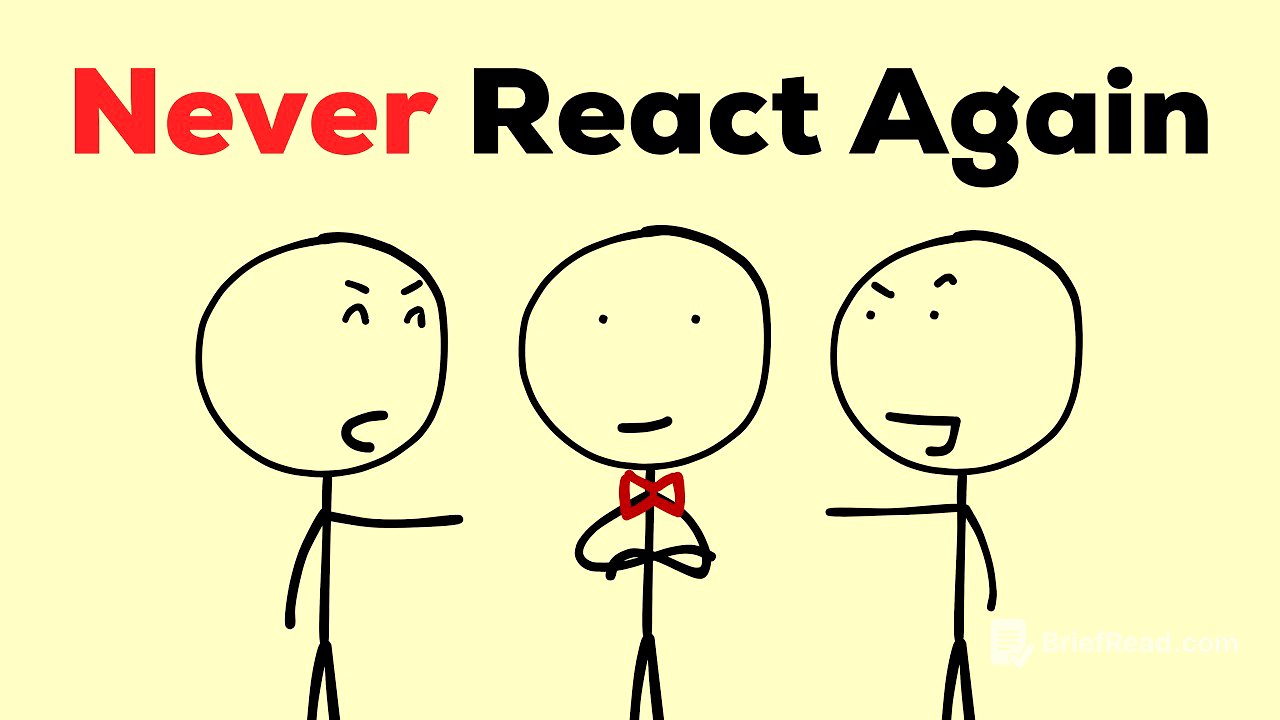
TLDR;
This video provides a comprehensive guide to mastering emotional regulation by understanding and managing triggers, emotions, and reactions. It emphasizes the importance of recognizing the 90-second rule of emotional response, identifying underlying emotions, utilizing the space between trigger and response, and reframing perspectives on difficult people. The video also covers setting healthy boundaries, employing strategic timeouts, mapping emotional triggers, practicing compassionate distance, and controlling inner narratives to achieve emotional mastery.
- Understanding the 90-second rule helps to manage initial emotional responses.
- Identifying underlying emotions can lead to more effective communication and resolution.
- Reframing difficult people as emotional trainers can foster personal growth.
Introduction [0:00]
The video introduces the concept that emotional reactions, particularly anger, have a limited neurological duration of about 90 seconds unless prolonged by continuous mental replay. It suggests that individuals have a choice to either let these emotions dissipate naturally or fuel them by dwelling on the triggering event. The video contrasts this with individuals who maintain composure, implying that emotional regulation is a learned skill rather than an innate trait.
Chapter 1: "The Button-Pusher Myth" [1:01]
This chapter challenges the idea that others can control your emotions by "pushing your buttons." It explains that these "buttons" are actually unhealed wounds or value violations from the past. When someone triggers you, they are highlighting areas where you need to heal. By recognizing the root cause of your emotional reactions, you can take control of your emotional state and prevent others from dictating how you feel.
Chapter 2: "The Secondary Emotion Revelation" [2:08]
The chapter reveals that anger often serves as a protective mechanism, masking more vulnerable emotions such as hurt, fear, or shame. It suggests that addressing these underlying emotions directly, rather than expressing anger, can lead to more effective communication and resolution. Vulnerability fosters healing, while anger creates distance.
Chapter 3: "The Choice Point Discovery" [3:22]
This chapter introduces the concept of a "choice point," which is the brief moment between a trigger and your reaction. It emphasizes that you have the freedom to choose your response, regardless of external circumstances. By recognizing and utilizing this choice point, you can become the author of your own experience and avoid impulsive reactions.
Chapter 4: "The Observer Self Techniquer" [4:34]
The chapter introduces the concept of the "observer self," which is the part of you that can watch your emotions without becoming them. By activating your observer self, you can create distance between yourself and your emotions, allowing you to choose a more helpful response. This technique provides emotional immunity, enabling you to experience emotions without being controlled by them.
Chapter 5: "The Reframe Revolution" [5:45]
This chapter suggests reframing difficult people as "emotional trainers" who help you develop emotional fitness. By viewing challenging individuals as opportunities for growth, you can shift from being a victim to a student. This perspective allows you to respond with curiosity and develop skills such as resilience and boundary setting.
Chapter 6: "The Boundary Blueprint" [7:12]
The chapter emphasizes that boundaries are not walls but gates that protect your energy. Healthy boundaries involve being clear about what you will and won't accept. Setting boundaries preserves your capacity to help others and prevents burnout.
Chapter 7: "The Timeout Protocol" [8:19]
This chapter distinguishes between strategic retreat and running away, advocating for the former as a means to reset your nervous system and regain control. Taking a timeout from a triggering situation allows you to respond thoughtfully rather than reactively, preventing damage that may take weeks to repair.
Chapter 8: "The Trigger Map Method" [9:52]
The chapter introduces the "trigger map method," which involves identifying patterns in your emotional triggers. By keeping a trigger journal and noting who was involved, what they did or said, and what it reminded you of, you can prepare for triggers and transform reaction into response.
Chapter 9: "The Compassionate Distance" [11:30]
This chapter explains the concept of "compassionate distance," which means maintaining emotional boundaries while keeping your heart open. It involves supporting others without absorbing their emotions, similar to a lifeguard throwing a life preserver without jumping into the water.
Chapter 10: "The Story Stopper" [12:46]
This chapter emphasizes that your emotional experience is shaped by the story you tell yourself about reality. By becoming conscious of your stories and challenging negative interpretations, you can change your emotional experience. The chapter encourages you to reflect on recent upsets and consider alternative stories you could have told.