
TLDR;
This lecture explores the psychological impact of sports injuries, emphasizing the importance of mental health awareness in the recovery process. It covers emotional responses, psychological stages, and the roles of sports psychologists, coaches, and family in supporting injured athletes. The lecture also touches on future trends in mental health support for athletes, highlighting the need for a multidisciplinary approach to recovery.
- Understanding psychological effects of sports injuries
- Identifying emotional responses to injury
- Exploring psychological strategies for recovery
- Discussing support systems for injured athletes
- Examining long-term mental health implications
Introduction [0:15]
The lecture introduces the significant psychological impact of sports injuries on athletes, affecting them mentally and emotionally. It highlights the increasing awareness of mental health in sports recovery, noting that sports psychologists are now commonly involved in the care of injured athletes. The objectives of the lecture include understanding the psychological effects of injuries, identifying emotional responses, exploring psychological strategies for recovery, discussing support systems, and examining long-term mental health implications.
Mind-Body Connection and Emotional Responses [2:09]
The lecture emphasizes the mind-body connection in sports injuries, noting the interplay between physical injury and mental health. Psychological factors such as stress, anxiety, and mental resilience can affect recovery. Common emotional responses to injury include shock, denial, anger, depression, and acceptance. The severity and duration of the injury can also impact an athlete's psychological state, with more severe injuries leading to greater psychological impact.
Psychological Stages of Injury Recovery [3:41]
The lecture discusses the psychological stages of injury recovery, applying the Kubler-Ross grief model, which includes denial, anger, bargaining, depression, and acceptance. It is important for athletes to move through each stage for effective recovery, though individual differences in processing injury-related grief may exist. Depression and anxiety are prevalent among injured athletes, and it is crucial to watch for signs and symptoms, using psychological assessment tools for early detection.
Loss of Identity, Fear of Re-injury, and Isolation [5:05]
The lecture addresses the loss of identity and self-esteem that athletes may experience post-injury, leading to an identity crisis. Strategies to rebuild identity during rehabilitation are essential. The fear of re-injury is a significant psychological barrier to resuming training and competition, impacting performance and decision-making. Social and emotional isolation can occur due to a lack of team participation and support, emphasizing the importance of maintaining social involvement with the team and providing positive support.
Long-Term Injuries and Psychological Differences [7:21]
The lecture examines the severe mental health consequences of long-term or career-ending injuries, highlighting the need for coping mechanisms and career counseling for athletes transitioning out of the sport. Psychological differences among athletes, based on factors like age, gender, and cultural background, influence their responses to injury. Elite athletes face unique challenges due to the fear of loss of income and status.
Role of Sport Psychologists [8:47]
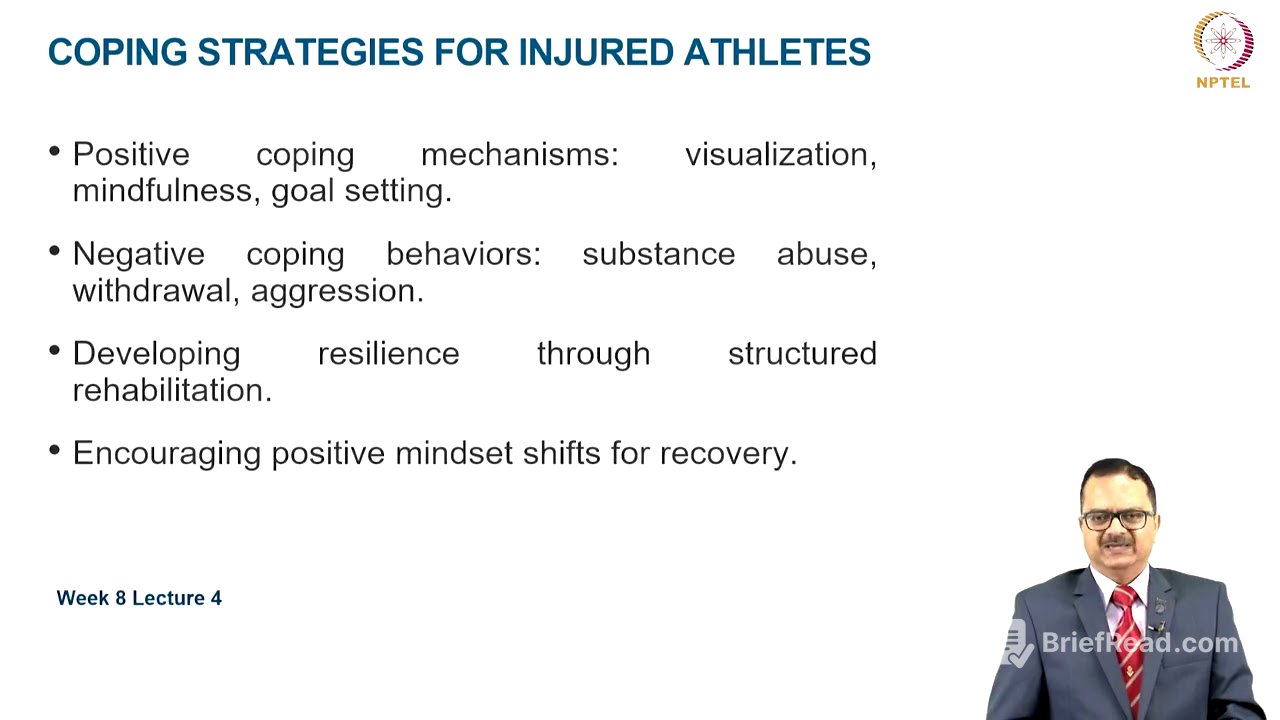
The lecture emphasizes the crucial role of sports psychologists in recovery, providing psychological counseling pre-injury, during rehabilitation, and post-return to sport. They use various techniques for injury rehabilitation and collaborate with coaches, medical teams, and family. Coping strategies for injured athletes include visualization, mindfulness, and goal setting, while negative behaviors like substance abuse should be promptly addressed.
Role of Coaches, Family, and Mental Skills [10:13]
The lecture underscores the importance of psychological support from coaches and support staff, who should maintain a positive and open communication style. Family and peer support play a strong role in providing emotional and mental support, fostering a positive team culture focused on recovery. Mental skills for injury rehabilitation, such as imagery, self-talk, and cognitive behavioral therapy, are increasingly used.
Compliance, Mindfulness, and Placebo Effect [12:10]
The lecture addresses factors affecting compliance with rehabilitation protocols and strategies to maintain motivation during long recovery periods. Psychological intervention has a strong impact on adherence to rehabilitation, and short-term goals help sustain motivation. Mindfulness and meditation offer benefits for stress reduction and improved focus. The placebo effect in recovery is effective, and awareness of how belief in treatment affects recovery outcomes is important.
Psychological Preparation and Screening Tools [14:14]
The lecture discusses psychological preparation for return to play, focusing on building re-confidence and gradually exposing the athlete to sport-specific activities. Psychological screening and assessment tools, such as standardized questionnaires and interviews, are used to evaluate mental health in injured athletes and monitor progress throughout rehabilitation. Examples of athletes overcoming psychological injury challenges and lessons learned from real-life cases should be used in injury treatment strategies.
Future Trends and Conclusion [15:42]
The lecture concludes by highlighting future trends, including virtual reality for mental recovery and artificial intelligence for mental health assessments. Recovery requires a multidisciplinary approach involving psychologists, physiotherapists, coaches, and sports medicine doctors. Holistic recovery programs integrating mental and physical rehabilitation are essential, along with long-term mental health monitoring.