TLDR;
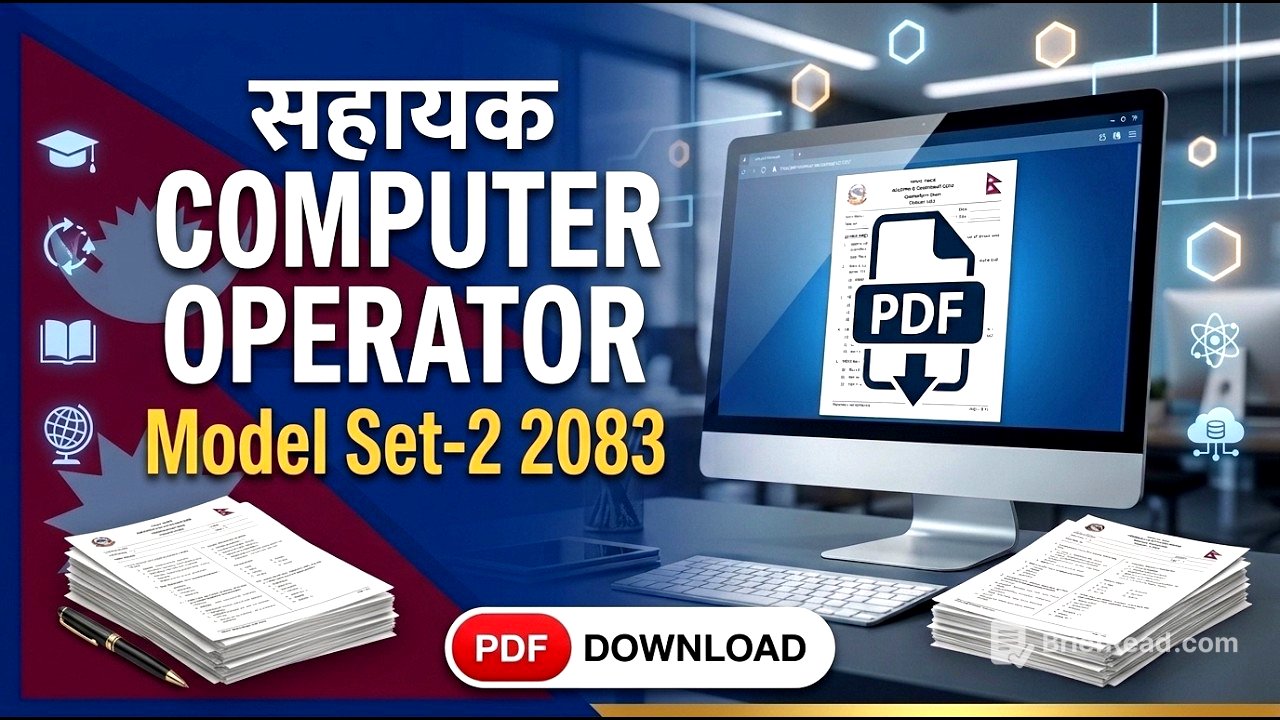
This video from EduByte discusses the second model set for computer operator assistants, following a previous video on the first model set. It covers various questions and answers related to Nepal's policies, geography, history, computer terminology, and software usage, with a strong focus on preparing for exams and practical applications in computer operation.
- Introduction to the second model set for computer operators.
- Various questions ranging from Nepal's national statistics to computer operations and software functions.
Introduction to the Second Model Set [0:00]
The video begins with a greeting and an introduction to the second model set for computer operators. It references a previous model set video and directs viewers to download related PDF notes and practice MCQs from the website.
Questions on Nepal's Policies and Statistics [0:30]
The first few questions delve into Nepal's 16th periodic plan, targeting the reduction of absolute poverty, and identify the Koshi River as having the highest discharge capacity among Nepal's rivers. The current population density based on the national census is revealed to be 198 per square kilometer.
United Nations Sustainable Development Goals [2:00]
The video addresses the ninth goal of the UN's Sustainable Development Goals, which deals with industry, innovation, and infrastructure. It then discusses the term 'Fiste Maharaja,' identifying Chandra Shamsher as the person referred to in Rana period history.
Constitutional Rights and Local Governance [3:30]
Various questions cover aspects of Nepal's current constitution, including the schedule that mentions shared rights among the federal, provincial, and local levels, indicating this is found in Schedule 9. It further discusses the famous religious site, Halesi Mahadev, located in Khotang district.
Fundamentals of Communication Rights and International Events [5:00]
The constitutional right to communication is stated to be protected under Article 19. The upcoming FIFA World Cup in 2026 is mentioned, which will be hosted by the USA, Canada, and Mexico.
Municipal Governance and Office Management [6:30]
Discussion shifts to local municipalities, with the current number being 11. It then explains the initial office process for document registration and the need for organized filing systems in government offices.
Civil Service Regulations and Employee Rights [8:00]
The exam covers civil service regulations including annual leave entitlement of 12 days and mandatory retirement age of 58 years according to the Civil Service Act of 2049.
Public Procurement Transparency and Legislation [9:30]
Public bodies are required to follow the Public Procurement Act to ensure transparency during the procurement of goods and services.
Administrative Processes and Regulations [11:00]
Administrative processes for addressing policy-related issues are discussed, along with the importance of maintaining government-led procurement procedures under the appropriate statutes.
Understanding Computer Memory and Applications [13:00]
Memory types such as volatile memory that loses data when power is lost are examined. The concept of memory performance metrics is introduced, explaining what MIPS (Million Instructions Per Second) stands for.
Microsoft Word Functions and Features [14:30]
Key features of Microsoft Word, such as commands to reset screen displays, are noted, along with shortcuts for altering text cases.
CSS and HTML Fundamentals [16:00]
CSS properties for controlling margins and paddings in web elements are highlighted, emphasizing the differences between the two.
Network Topologies and Security [17:30]
Network topologies are defined with an identification of bus topology, which connects devices to a single central cable, including its advantages and structure.
Internet Protocols and Cybersecurity [19:00]
The role of DNS in converting domain names to numerical IP addresses is explained, as well as mentioning the prevention methods against phishing scams and malware threats.
Final Thoughts and Resource Availability [20:30]
The video concludes by stating that further resources, including a PDF of the questions discussed, can be found in the description, encouraging viewers to download and access past content for their studies.