TLDR;
This video reflects on the speaker's experiences and insights from 2026, sharing personal anecdotes and lessons learned. It emphasizes the importance of kindness, empathy, and helping others, while also cautioning against the potential pitfalls of pride and arrogance. The speaker encourages viewers to cultivate a mindset of generosity and compassion, highlighting how small acts of kindness can contribute to a more beautiful and harmonious world.
- Importance of kindness, empathy, and helping others.
- Caution against pride and arrogance.
- Small acts of kindness can contribute to a more beautiful and harmonious world.
Intro [0:03]
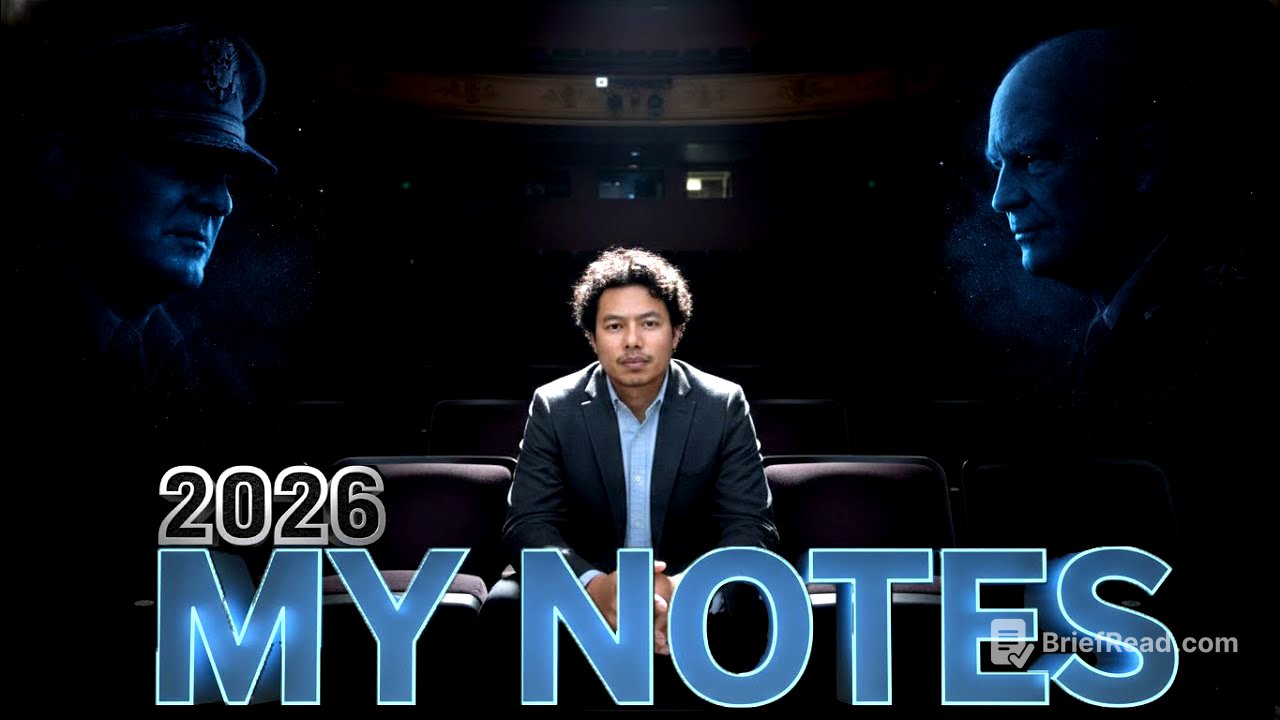
The speaker starts the first video of 2026 by apologizing to viewers who may have been expecting a new design or format. The speaker mentions updating the channel's logo due to potential travel plans requiring new images. The speaker affirms that the channel's purpose and their mindset remain unchanged from the previous year.
American Generals: Douglas MacArthur and Dwight D. Eisenhower [0:59]
The speaker introduces the main topic: two famous American generals, Douglas MacArthur and Dwight D. Eisenhower, prominent during World War II. The speaker explains that comparing these two figures allows for a more impactful delivery of the message. The speaker clarifies that the intention isn't to give advice, but to share a perspective.
1952 Election [1:48]
The speaker discusses the 1952 US election, where the Republican Party sought to break the Democratic Party's hold on the presidency, which had lasted for two decades. The American public desired change, weary of war and fearful of the spread of communism during the Cold War. The Republican Party considered two main candidates: Douglas MacArthur and Dwight D. Eisenhower.
Douglas MacArthur's Background [3:47]
Douglas MacArthur was from a military family and excelled academically and athletically at West Point. He served in World War I, earning numerous awards, and became one of the youngest generals in American history. After retiring from the American army, he became a military advisor to the Philippines. During World War II, President Roosevelt recalled MacArthur to oversee the Asian theater.
MacArthur in WWII [6:09]
MacArthur was assigned to defend the Philippines against the Japanese. As the Japanese advanced, MacArthur was ordered to retreat to Australia, a controversial decision. He famously vowed, "I shall return." This promise became a historic commitment to the Filipino people, the Allied forces, and a warning to Japan. After World War II, MacArthur oversaw the post-war reconstruction of Japan, earning the respect of the Japanese people.
Korean War and Conflict with President Truman [9:59]
During the Korean War, MacArthur was placed in command. Initially successful, the entry of Chinese forces led to a stalemate. MacArthur wanted to use nuclear weapons against China, but President Truman, a civilian leader, refused. MacArthur publicly criticized Truman's decision, violating the tradition of military subordination to civilian authority. Truman relieved MacArthur of his command, though he remained a hero to the American public.
MacArthur's Presidential Aspirations [12:57]
After being dismissed, MacArthur returned to the US and addressed Congress. It became apparent that he desired the presidency. Despite not explicitly stating his ambition, his actions suggested he was open to a Republican nomination.
Dwight D. Eisenhower's Background [14:20]
Dwight D. Eisenhower's early military career was less distinguished than MacArthur's. However, during World War II, he commanded the Allied forces in Europe, leading the successful campaign against Nazi Germany. Eisenhower was known for his ability to unite diverse personalities and negotiate effectively. He was trusted by both European leaders and the American public. Eisenhower's leadership style was collaborative and diplomatic.
Eisenhower's Strengths [16:42]
Eisenhower's strengths included his ability to listen, negotiate, and unite diverse groups. He was trusted by both military personnel and civilian leaders. His leadership during World War II demonstrated his ability to manage complex situations and work with difficult personalities.
Eisenhower Elected President [17:28]
The Republican Party chose Eisenhower as their presidential candidate. His strengths aligned with the needs of the time: a strong stance against communism, a calm demeanor, and the ability to unite diverse factions. Eisenhower won the election, ending the Democratic Party's 20-year hold on the presidency.
Eisenhower's Presidency [19:15]
Eisenhower served two terms as president, navigating the Cold War with a steady hand. In his farewell address, he warned against the growing influence of the "military-industrial complex," cautioning against excessive military spending at the expense of other sectors like healthcare and education.
Comparison and Message [20:43]
The speaker compares MacArthur and Eisenhower, one an early achiever and the other a late bloomer. The speaker emphasizes that moral character and mindset are crucial in life's journey. Success can come at different times for different people, and it's important not to be discouraged by early setbacks or the achievements of others.
Personal Anecdote: Early Mindset [23:35]
The speaker shares a personal anecdote about their early mindset, characterized by self-reliance and a reluctance to help others or ask for help. This perspective was reinforced by a wealthy individual who advised the speaker to focus solely on personal success and avoid involvement in others' problems.
Personal Anecdote: Helping a Woman with a Bicycle [26:01]
The speaker recounts an incident where they spontaneously helped a woman who had fallen off her bicycle with two children. The experience of helping without expecting anything in return was profoundly satisfying. It sparked a desire to help others and a realization that giving can be more rewarding than receiving.
Personal Anecdote: Giving Way to a Stranger [29:58]
The speaker describes an incident at a market where they and a stranger reached for the same item simultaneously. Instead of asserting their claim, the speaker allowed the stranger to take it. The stranger then handed the item to the speaker. This small act of kindness left a lasting impression, reinforcing the idea that generosity and consideration can create positive interactions.
Personal Anecdote: Train Ride in Europe [35:03]
The speaker recounts a train journey in Europe where they were traveling in first class for security reasons. Due to a delay, passengers from another train boarded their train. A young man who had been occupying a seat left to buy something, and an elderly woman took his seat. When the young man returned, he didn't make a fuss but sat on the floor.
Personal Anecdote: The Young Man's Kindness [40:33]
The train conductor offered to find the young man another seat, but he declined, content to sit on the floor. This act of selflessness impressed the speaker, who realized that helping others doesn't always require grand gestures.
Personal Anecdote: Cranberry Farm [44:59]
The speaker describes visiting a cranberry farm in Canada, where cranberries are harvested by flooding the fields. The speaker was impressed by the family-run operation and the unique harvesting process.
Personal Anecdote: Family Photo [49:43]
While visiting the cranberry farm, the speaker wanted to take a photo but was traveling alone. A family offered to help, and their kindness and warmth left a lasting impression. The speaker realized that the connection between the family members was more meaningful than the photo itself.
The Importance of Loving Relationships [53:09]
The speaker reflects on the importance of loving relationships, particularly within families. Children who grow up in loving and supportive environments tend to have better social skills and are more well-adjusted. The speaker encourages viewers to cultivate kindness and compassion in their own lives, contributing to a more beautiful and harmonious world. The speaker ends by asking viewers to consider whether they are willing to help those in need.