TLDR;
In this video, Opal Rowe shares 45 Appalachian egg cooking tricks, offering practical tips and traditional methods honed through years of experience. Key points include techniques for frying, boiling, and poaching eggs, the importance of using a well-seasoned skillet, and tips for ensuring eggs are flavorful and perfectly cooked. The video emphasizes the significance of slow cooking and maintaining proper techniques throughout the egg preparation process.
- Use a bacon grease can for flavor and avoid tough eggs.
- Season and maintain cast iron skillets for better egg cooking results.
- Fresh eggs are better for certain dishes, while older eggs are recommended for boiling.
- Simple cooking methods like steaming can yield superior results.
The Secret on the Stove [0:00]
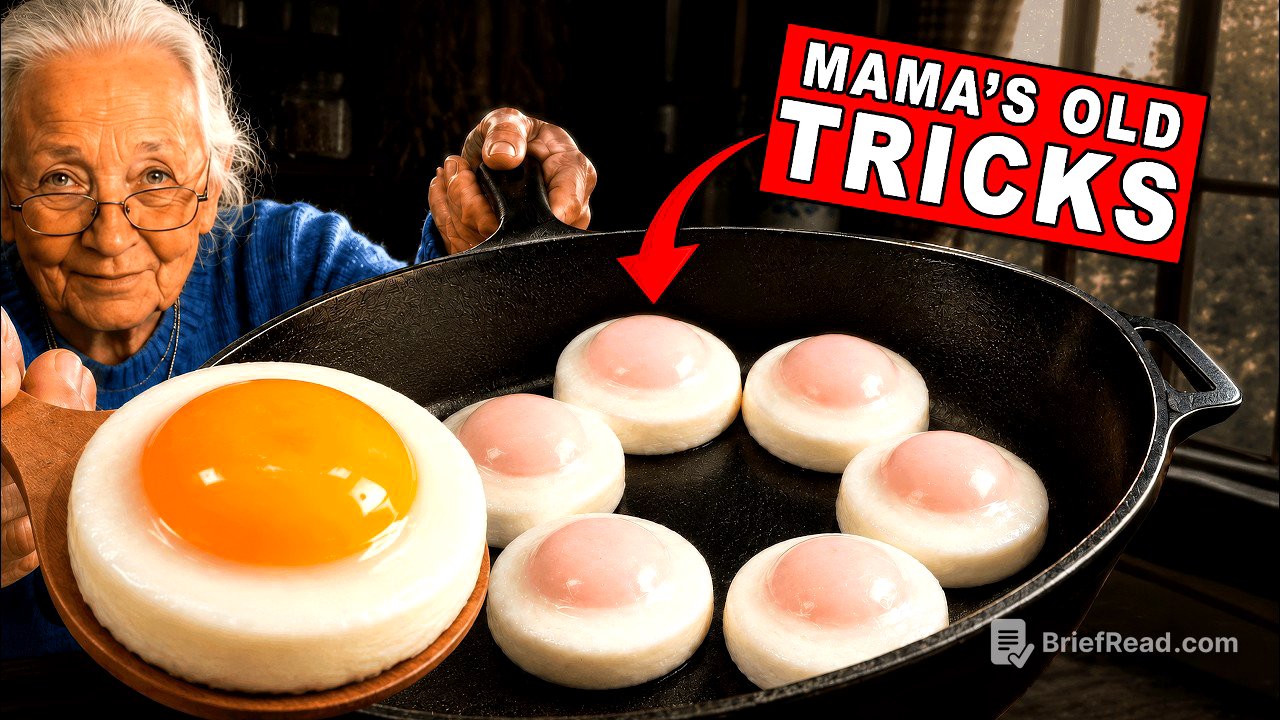
Opal introduces a pan on her stove with six perfectly rounded eggs, promising to reveal a unique egg cooking method. She emphasizes that these cooking techniques are not trend-based fads but rather time-tested wisdom from a mountain kitchen. The video is a guide through 45 tips for preparing eggs, catering to both seasoned cooks and novices alike.
The Bacon Grease Can [2:08]
Rowe discusses the bacon grease can that is often used to store drippings from cooked bacon. She explains its cultural significance and notes that the heat and hurry, rather than the grease itself, can contribute to tough eggs. Maintaining a proper cooking temperature prevents eggs from becoming sad and leathery.
Seasoning Iron So Eggs Won't Stick [3:03]
The importance of seasoning a cast iron skillet is highlighted to ensure eggs do not stick. Opal shares her mother's technique for keeping skillets dark and smooth through repeated use and proper maintenance, enabling eggs to slide easily when cooked.
One-Yolk Homemade Mayonnaise [3:48]
Rowe explains how to make mayonnaise using just a single egg yolk, emphasizing that homemade versions surpass store-bought in flavor. The process includes adding vinegar, salt, and a thin thread of oil while beating vigorously to create a thick emulsion.
Egg in a Hole [4:45]
Opal recalls her childhood experience making "egg in a hole," where a hole is cut into a slice of bread, it is buttered, and an egg is cracked in the center. The method produces a golden-brown exterior while maintaining a soft yolk. The discarded bread circle is also fried for a tasty treat.
Hard Eggs Baked in a Muffin Tin [5:34]
To batch-cook hard-boiled eggs without boiling water, Rowe recommends placing an egg in each cup of a muffin tin and baking at 325°F for about 30 minutes. This dry heat method ensures even cooking and prevents cracking.
Scrambled Low and Slow [6:22]
For perfect scrambled eggs, Rowe advises cooking them at a low temperature to avoid toughness. Eggs should be removed from the heat just before they seem fully cooked, allowing residual heat to finish the cooking process on the plate.
Crack on the Flat, Not the Rim [7:13]
Opal shares the technique of cracking eggs on a flat surface rather than the bowl's rim. This prevents shell fragments from contaminating the egg, as cracking on a textured edge pushes bits inward.
Let the Butter Tell You [7:56]
The video covers how to determine the right temperature for cooking by observing the butter. Opal explains that butter transitions from hissing and foaming to a quiet state, indicating it is ready for cooking.
Whisk the Fat Into the Eggs [8:45]
Rowe advises incorporating fat such as butter or grease directly into beaten eggs before cooking. This technique helps achieve a lighter texture and prevents eggs from becoming dense or tough.
Baste the Yolk, Never Flip It [9:43]
Opal introduces the method of basting yolks with hot fat instead of flipping eggs, allowing for a perfectly cooked fried egg without the risk of breaking the yolk.
Beat in Air With a Fork [10:25]
To achieve fluffy scrambled eggs, Rowe explains the importance of incorporating air by vigorously beating eggs with a fork, creating bubbles that contribute to a light texture.
When to Salt Your Eggs [11:25]
Rowe clarifies the correct timing for salting eggs, which is prior to cooking. Allowing salted eggs to rest for 10-15 minutes helps to unwind proteins, leading to a more tender texture when cooked.
Use a Smaller Skillet [12:18]
For smaller portions of eggs, Opal suggests using a smaller skillet. A large skillet can cook egg too quickly, leading to uneven results.
Your Stirring Hand Sets the Texture [13:07]
Rowe teaches that the texture of scrambled eggs is affected by how quickly or slowly you stir them. Gentle stirring creates larger curds, while faster stirring results in smaller, softer curds.
Stop Before It Looks Done [14:09]
The key to perfect scrambled eggs is to remove them from heat before they fully appear cooked to avoid dryness. Covered with a lid, they will finish cooking with residual heat.
Brown Eggs vs White Eggs [14:56]
Rowe debunks myths surrounding brown and white eggs, stating they are nutritionally identical and the color simply depends on the hen breed. Egg quality is influenced more by the hen's diet.
Water, Not Milk [15:50]
For fluffier scrambled eggs, Rowe recommends using water instead of milk. Water helps create steam, yielding lighter and airier eggs.
For Easy Peeling, Boil the Old Ones [16:49]
Using older eggs is recommended for boiling, as their white is less adherent to the shell. Adding baking soda can also help in easing the peeling process.
The Old Whirlpool Poach [17:44]
Opal covers the traditional poaching method which involves swirling water before adding the egg, with vinegar to help maintain structure. However, she suggests a more efficient method should be saved for later.
Steam-Baste Under a Lid [18:39]
Rowe advocates for steam-basting eggs by adding water to the pan and covering it. This method keeps the yolk intact and avoids flipping, ensuring gentle cooking.
Timing the Perfect Boiled Egg [19:38]
Precision timing is necessary for boiling eggs to achieve desired doneness such as soft-boiled or hard-boiled. She provides specific timeframes for each egg type.
A Canning Ring for a Round Egg [20:30]
To achieve perfectly round fried eggs for sandwiches, Rowe suggests using a canning ring. Grease it, place it in a skillet, and crack an egg into the ring for a neat presentation.
Spin to Tell Raw From Cooked [21:35]
Rowe introduces a simple trick to distinguish raw eggs from hard-boiled eggs by spinning them on a flat surface. The cooked egg spins steadily, while the raw one wobbles.
Candling an Egg to the Light [22:42]
Rowe explains the practice of checking an egg's freshness by holding it to a bright light to reveal its contents, a method known as candling.
One Extra Yolk for a Richer Scramble [23:41]
Adding an extra yolk to scrambled eggs enhances richness and creaminess due to the yolk's fat content, creating a more luxurious dish.
The Flood Method for a Big Batch [24:45]
Rowe shares the 'flood method,' which allows for cooking large quantities of scrambled eggs by alternating between liquid and solid stages to prevent overcooking.
Deviled (Dressed) Eggs [25:43]
Opal highlights the significance of deviled eggs, often called dressed eggs, noting their role in community events and comforting others in need.
Egg Gravy, or Poor-Do [26:49]
Rowe shares a thrifty method of using eggs to create a filling gravy, stretching two eggs to feed a larger group by incorporating them into a milk or water gravy served over biscuits.
Eggs Baked in Tomato Gravy [28:02]
A simple recipe for eggs baked in a skillet with tomato gravy is presented, utilizing regular ingredients that create a hearty dish that feeds a family.
A Tender Country Omelet [28:59]
Rowe explains how to make a tender, fluffy omelet by cooking it gently and not overcooking, allowing residual heat to finish the cooking process.
A Blood Spot Is Harmless [29:59]
Rowe reassures viewers regarding the presence of blood spots in eggs, clarifying that they are harmless and not indicative of spoilage.
The Green Ring Means Overcooked [31:01]
Rowe explains that a gray-green ring around a boiled egg yolk indicates overcooking rather than spoilage, resulting from a reaction between the sulfur in the white and iron in the yolk.
A Double Yolk, a Young Hen [32:02]
The video describes how a double yolk signifies a young hen that has just begun laying eggs, debunking myths regarding superstition and luck.
Freezing Eggs for Winter [33:17]
Opal advises freezing eggs for later use, emphasizing that they should be beaten and not frozen in their shells. Guidelines are provided to ensure proper preservation.
Store Them Pointy End Down [34:19]
Eggs should be stored pointy end down to maintain freshness longer. This method keeps the yolk centered away from the air pocket, preventing quicker spoilage.
Keeping Eggs Without an Icebox [35:22]
Rowe reflects on old methods of preserving eggs without refrigeration through techniques such as greasing or using lime water, showing how these methods thrived in earlier times.
Putting Up Eggs in Lime Water [36:15]
Opal discusses the process of preserving eggs in a lime water solution, allowing for storage of fresh eggs long-term without refrigeration.
Steam Them Instead of Boiling [37:15]
Steam cooking eggs is presented as a gentler, more effective method than boiling, yielding easier peeling and better texture.
Beet-Brine Pickled Eggs [38:13]
Rowe talks about pickling eggs in beet juice, which not only preserves the eggs but also creates an attractive and tangy treat.
The Bloom — Never Wash a Fresh Egg [39:12]
It is important not to wash farm-fresh eggs, as they have a natural protective coating, referred to as the bloom, that keeps them safe and fresh.
An Eggshell in the Coffee Pot [40:12]
Rowe shares a tip about using crushed eggshells in coffee to help settle the grounds, producing a clearer and smoother coffee.
Onion-Skin Dyed Eggs [41:12]
Traditional methods of dyeing Easter eggs with onion skins are recalled, creating beautiful natural colors and patterns without artificial ingredients.
The Egg Carton's Second Life [42:09]
Rowe describes how empty egg cartons can be repurposed for gardening or making fire starters, demonstrating a resourceful use of kitchen waste.
The Perfect Standing Eggs [43:14]
Rowe highlights the technique for ensuring eggs stand upright, making them easier to cook and present beautifully.
Mama's Cast Iron Skillet [44:25]
The video concludes with Opal's cherished cast iron skillet, which symbolizes tradition, resourcefulness, and the art of cooking passed down through generations.
Come Set With Me a Minute [45:44]
Rowe encourages viewers to engage with her by sharing their own egg cooking experiences and who taught them these methods, fostering a sense of community around these traditional practices.