TLDR;
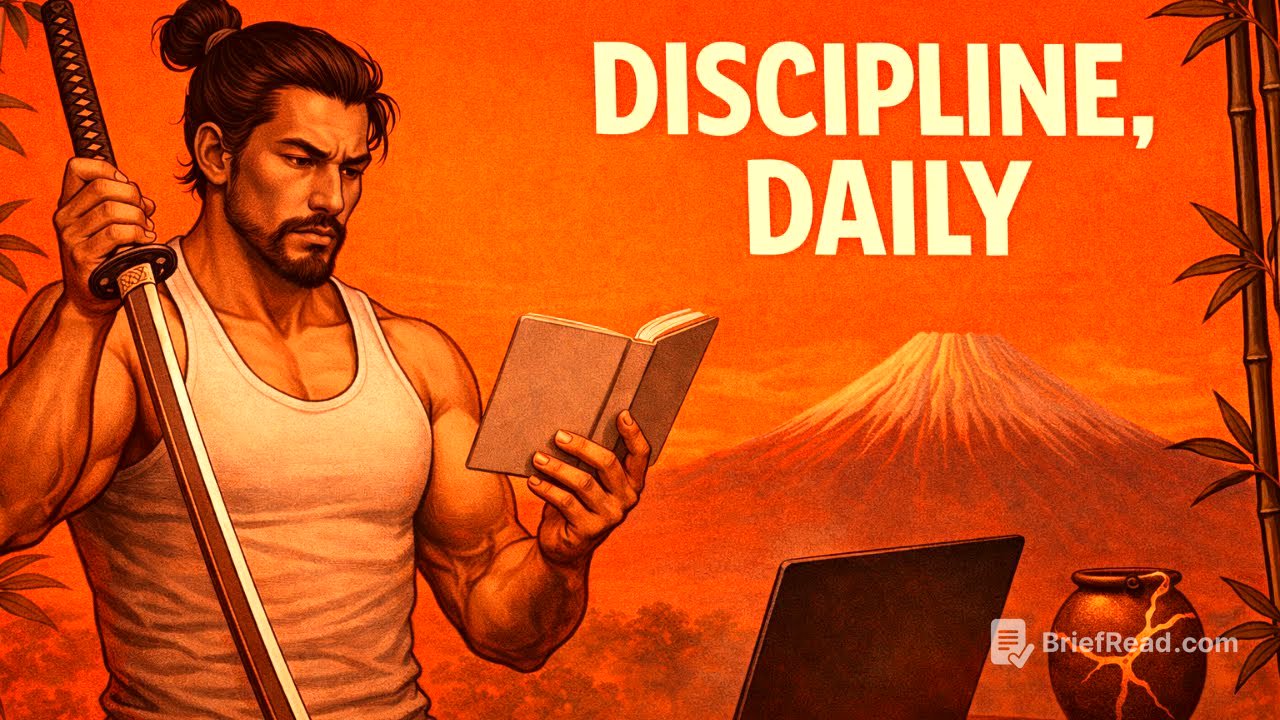
This video explains how to achieve lasting personal change through a system combining ancient Japanese philosophies and modern habit formation science. It contrasts those who repeatedly fail at self-improvement with those who successfully transform their lives. The key is to focus on building a solid internal structure through small, consistent actions rather than attempting rapid, unsustainable changes.
- Focus on building a solid internal structure through small, consistent actions.
- Combine ancient Japanese philosophies with modern habit formation science.
- Emphasize the importance of identity and systems over goals and motivation.
Chapter 1. The Boy with No Future [3:37]
Nolan, a 19-year-old living an aimless life in a small American town, faces a rude awakening when reality hits. He spends his time partying, drinking, and avoiding responsibility, with no plans or passions. His average existence is disrupted when he performs poorly on his college entrance exam, disqualifying him from scholarships, and his father's sudden heart attack leaves him unable to work. With his mother caring for a newborn, Nolan is forced to confront the need to support his family, despite lacking discipline, skills, or a plan. He initially panics and denies the situation before attempting an unrealistic transformation plan involving waking up at 5:00 a.m., studying for six hours, and quitting all his bad habits at once.
Chapter 2. The Video That Changed Everything [9:08]
Nolan stumbles upon a YouTube video about Kaizen, the Japanese concept of continuous improvement through small daily changes. The video emphasizes that the problem isn't a lack of discipline but trying to change too much too quickly. Inspired, Nolan researches Kaizen and discovers James Clear's book "Atomic Habits," which reinforces the idea that systems are more important than goals. He learns about keystone habits, which trigger a cascade of positive changes. Nolan decides to start with an incredibly small habit: reading five pages of the book every night before bed, understanding that "possible is more powerful than perfect."
Chapter 3. The First 14 Days [13:05]
Nolan commits to reading five pages each night without telling anyone. Initially, it feels insignificant, but he persists. By the tenth day, he looks forward to his reading time, as it's the only promise he has kept to himself in years. After two weeks and 70 pages, he has absorbed concepts from "Atomic Habits," such as the four stages of habit formation (trigger, craving, response, reward) and the importance of making habits obvious, appealing, easy, and satisfying. He realizes he's proving to himself that he can be the person he wants to be through small, repeated actions. Nolan strategically adds a second habit: walking to the mailbox each morning, a distance of only 200 meters, to promote movement and wakefulness.
Chapter 4. Employment in the Warehouse [16:19]
On the 21st day, Nolan's consistency catches the attention of his neighbor, Mr. Patterson, who offers him a job at a building materials depot. Nolan accepts the job, working the afternoon shift for minimum wage, which provides much-needed income for his family. The physical labor is exhausting, and one night, he almost skips his reading. However, remembering the book's advice to never miss two days in a row, he pushes through and reads his five pages. This experience teaches him that discipline is about doing something even when you don't want to.
Chapter 5. Kaizen Applied to Exercise [18:43]
After a month of working and maintaining his habits, Nolan applies habit stacking, adding five knee push-ups after his morning walk. Gradually, he progresses to regular push-ups. He also incrementally increases the distance of his walk, applying Kaizen to his exercise routine. His body adapts, and he naturally desires more activity. He internalizes the "2-minute rule," understanding that any habit can be broken down into a 2-minute version to make it easier to start and maintain.
Chapter 6. Mentoring [20:47]
Three months into his job, Nolan invests $500 of his $600 savings into an online mentorship program led by Marcus, the person from the Kaizen video that inspired him. The program introduces him to additional Japanese philosophies: Shoshin (beginner's mind), Gaman (worthy perseverance), Shuhari (three stages of mastery), Ichigo Ichi (this once-in-a-lifetime moment), and Wabi-sabi (beauty in imperfection). These philosophies, combined with James Clear's teachings, provide a comprehensive system for building lasting habits.
Chapter 7. The First Great Fall [27:56]
Six months into his journey, Nolan has transformed his life. However, his brother's bicycle accident leads to a large hospital bill, forcing Nolan to work extra shifts. His system collapses, and he reverts to his old habits. Discouraged, he reaches out to Marcus, who reminds him about Wabi-sabi and Gaman. Marcus advises him to focus on the smallest habit he broke to regain momentum. Nolan returns to reading five pages each night, gradually reintroducing his other habits.
Chapter 8. The Discovery of Ikigai [31:59]
Two months after his setback, Nolan resumes most of his habits and begins to question his purpose. He explores the concept of Ikigai, the Japanese philosophy of "reason for living." He identifies his Ikigai as being the kind of man his family can count on, which gives him a deeper purpose for his habits. He realizes that motivation changes, but purpose doesn't.
Chapter 9. The Examination [35:06]
A year after starting his journey, Nolan retakes the college entrance exam and scores high enough to receive a partial scholarship. His parents are proud, and Nolan realizes he is proud of himself for the first time in his life.
Chapter 10. The University and the New System [36:30]
Nolan starts college, applying Kaizen to his studies by consistently studying each subject for 30 minutes a day. He continues working, exercising, and reading, understanding that discipline becomes easier when it's tied to identity. He is no longer trying to be someone; he simply is that person.
Chapter 11. The College Group [37:51]
In college, Nolan shares his story and system with his friend Tyler, who is struggling with similar issues. Tyler implements Nolan's advice, starting with waking up 30 minutes earlier each day, and experiences positive changes. Nolan realizes that personal change can inspire change in others.
Chapter 12. 3 Years Later [40:01]
Three years later, Nolan has graduated from college and is working a stable job, supporting his family. His father has returned to work in a less strenuous role, and his brother is following in his footsteps by waking up early to exercise. Nolan maintains his habits effortlessly, understanding that identity is built one small action at a time. The video concludes by summarizing the key concepts and challenging viewers to start with one small habit for 14 days to prove to themselves that they can keep a promise.
![혼자 있을 때 가장 행복한 한국인들...? 대한민국은 어쩌다 관용이 제일 없는 나라 됐을까? ㅣ경쟁 교육 2부 [이게웬날리지]](https://wm-img.halpindev.com/p-briefread_c-10_b-10/urlb/aHR0cDovL2ltZy55b3V0dWJlLmNvbS92aS85REdteU9oRHNFay9ocWRlZmF1bHQuanBn.jpg)