
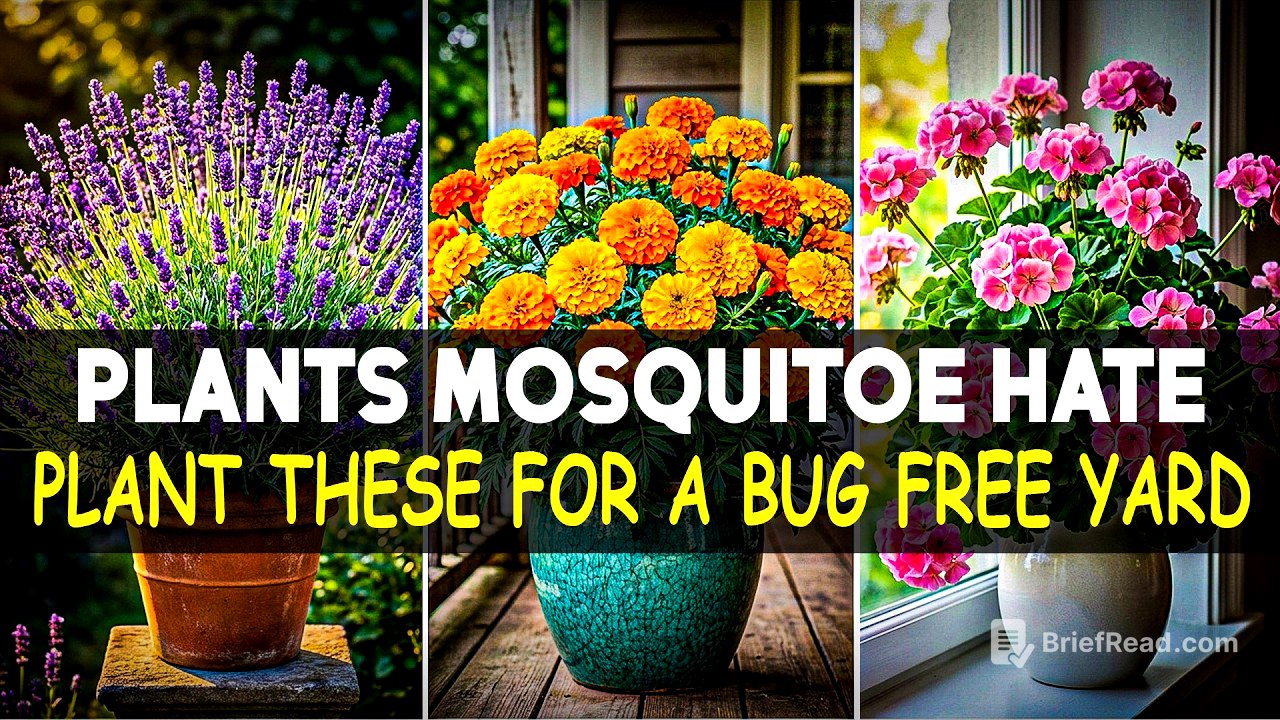
TLDR;
This video provides a comprehensive guide to 15 plants that can help repel mosquitoes, ranking them from the most effective to the least. It emphasizes that while some plants have strong scientific backing and proven repellent properties, others are more about marketing than actual mosquito control. The video also highlights the importance of eliminating standing water to effectively reduce mosquito populations.
- Lemon eucalyptus is the only plant formally endorsed by the CDC as a mosquito repellent.
- Catnip was found to be more effective than DEET in laboratory studies.
- Rosemary and sage, when burned, release compounds that deter mosquitoes.
- Eliminating standing water is crucial for mosquito control.
Intro [0:00]
Mosquitoes are adept at finding people through breath, sweat, body heat, and carbon dioxide trails, making it difficult to avoid them. Many plants marketed as mosquito repellents are ineffective when simply placed in pots. However, some plants genuinely work, with a few even outperforming DEET in laboratory settings, and one being formally endorsed by the CDC.
Lemon Eucalyptus [1:22]
Lemon eucalyptus is the only plant recommended by the CDC as a mosquito repellent. In 2008, the CDC added oil of lemon eucalyptus to its list of repellents proven to prevent mosquito-borne illnesses like West Nile virus and Zika. Studies have shown that a 30% concentration of the oil provides protection comparable to low concentrations of DEET. The active compound, PMD, is formed during the distillation of eucalyptus oil. While the plant in a pot has a modest effect, crushing the leaves and rubbing the fresh oil on exposed skin provides 45 minutes to 2 hours of genuine repellent protection.
Catnip [3:16]
Catnip was found to be 10 times more effective than DEET in repelling mosquitoes in a controlled laboratory study in 2001. The active compound, nepetalactone, is responsible for this effect. However, the study used concentrated nepetalactone extract, so the plant in a garden produces the compound at a lower concentration. Crushing fresh leaves and rubbing them on exposed skin can provide one to two hours of protection. Be aware that catnip attracts cats, so planting it in containers is advisable if there are outdoor cats nearby.
Rosemary [5:01]
Rosemary has been used for 2,000 years to repel insects, with Roman armies burning it in their tent fires. Rosemary contains compounds like cineole, camphor, and alpha-pinene, which vaporize when burned, creating a smoke plume that deters mosquitoes. The plant in a pot has little effect, but burning fresh sprigs on an outdoor fire clears the seating area of mosquitoes within minutes.
Sage [6:34]
Indigenous peoples have burned white sage for thousands of years as both a spiritual and practical mosquito deterrent. Studies have shown that burning sage smoke is even more effective than rosemary in still air. Common garden sage contains similar compounds to rosemary, such as thujone, camphor, and cineole. Dried sage bundles burn slowly and steadily, clearing mosquitoes from a backyard within five minutes.
Penny Royal [8:19]
Roman legionaries used penny royal in their bedding to repel fleas and biting insects. The active compound, pulagon, is released when the plant is brushed against, making casual contact effective. However, penny royal essential oil in concentrated form is toxic and dangerous for pregnant women, young children, and pets. It is best used as a low ground cover between stepping stones, where each step releases a small burst of oil.
Citronanella Grass [9:54]
Citronanella grass is the source plant for citronanella oil, used in commercial candles and sprays. While the candles work somewhat downwind in still air, the plant itself has little effect unless the leaves are crushed. Crushing leaves between the palms and rubbing the oil on the skin provides a topical repellent for 30 to 60 minutes. Cut leaves can also be thrown on a fire pit to clear the area of mosquitoes.
Basil [11:27]
Basil is unique because it continuously releases mosquito-repellent oils through its leaves without needing to be crushed. The volatile compounds eugenol, linalool, and estragole create a low-level repellent zone around the plant. Basil oil can also kill mosquito larvae in standing water. Holy basil, or tulsi, has a more concentrated oil profile and is particularly effective.
Peppermint [13:22]
Peppermint prevents and treats mosquito bites. Crushing the leaves and rubbing the oil on exposed skin acts as a short-acting topical repellent. If bitten, crushing peppermint leaves and applying them to the welt cools the skin and reduces itching. Peppermint spreads aggressively, so it is best planted in containers.
Lemon Balm [15:00]
Lemon balm is a topical mosquito repellent that grows well in pots. It contains citronellal, the same compound found in citronanella grass. Crushing the leaves and rubbing the oil on exposed skin provides a natural repellent for 20 to 40 minutes. Lemon balm is cold-hardy and tolerates partial shade, making it suitable for shady areas where lavender struggles.
Lavender [16:35]
Lavender's value as a mosquito repellent comes from brushing against it, which releases repellent oils. Planting lavender along paths and doorways allows people and pets to brush against it, creating small bursts of repellent oil in the air. While the plant in a pot has little passive effect, this brushing action makes it a useful perimeter plant.
Bee Balm [18:18]
Bee balm contains thymol, the same compound used in Listerine, which gives it a mild mosquito-repellent effect. More importantly, bee balm is a pollinator-friendly plant that attracts hummingbirds, native bees, and butterflies. It is a valuable addition to any garden for its ecological benefits.
Alliums [20:00]
Garlic and ornamental alliums release sulfur-based compounds that deter mosquitoes, aphids, and beetles. The repellent effect is modest, but alliums are more effective at controlling aphids and other soft-bodied pests in the soil. As a multi-purpose pest deterrent that also adds visual interest, alliums are a valuable addition to the garden.
Marigolds [21:36]
The marigolds sold at garden centers contain milder compounds than Dalmatian chrysanthemums, which are used in commercial insecticides. French and African marigolds produce alpha-terthienyl in the roots, suppressing soil nematodes, and release volatile oils that mildly deter mosquitoes and aphids when crushed. Marigolds bloom continuously, deter aphids on tomatoes, and repel rabbits, making them a worthwhile addition to the garden.
Pitcher Plants [23:09]
Pitcher plants kill mosquitoes one at a time by trapping them in their tube-shaped leaves and digesting them. However, pitcher plant pools also serve as breeding habitats for certain mosquito species. While fascinating to watch, pitcher plants have a limited impact on overall mosquito populations.
Lemon-Scented Geranium [24:41]
Lemon-scented geranium is the most marketed mosquito plant but also the least effective. Despite being sold under names like "citrosa" and "mosquito shocker," studies have shown it has no measurable effect on mosquito landing rates. While the leaves contain trace amounts of citronellol, providing a brief topical effect when crushed, the plant in a pot does nothing.
Conclusion [26:12]
The most effective way to reduce mosquitoes is to eliminate standing water sources, such as saucers under plant pots, clogged gutters, and wheelbarrows left in the rain. Mosquitoes can breed in very small amounts of water, so vigilance is key. While plants like rosemary, sage, lemon balm, and basil can help, they are most effective when combined with eliminating standing water.