
TLDR;
This video explores the lives of women in ancient Rome, highlighting their roles and contributions despite limited rights compared to men. It covers the responsibilities of women in households, the differences between wealthy and poor women, notable figures like Cornelia and Livia Drusilla, and the significance of priestesses like the vestal virgins.
- Women managed households and educated children.
- Wealthy women (matronas) enjoyed more comforts but had obligations.
- Influential women provided advice and were respected figures.
- Women participated in religious roles and community activities.
Women’s Roles in Ancient Rome [0:00]
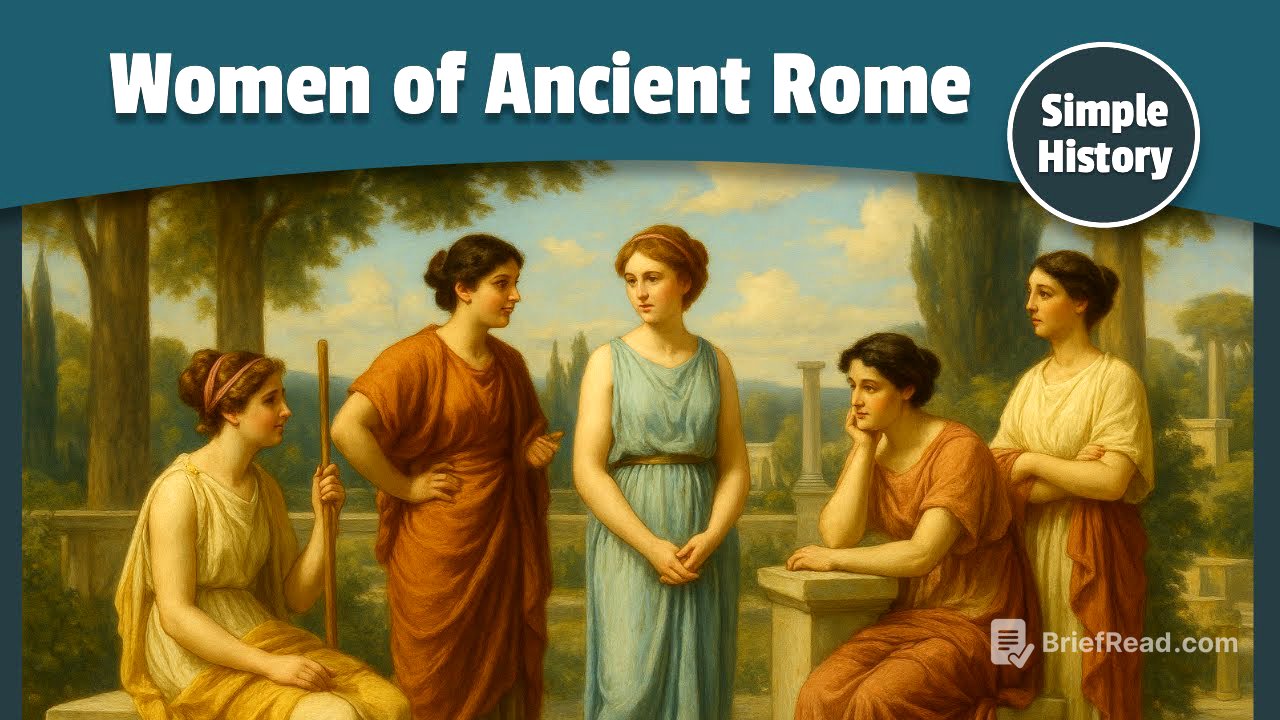
In ancient Rome, women's lives revolved around managing households and caring for families. Roman girls typically stayed home to learn domestic skills like cooking and child-rearing. A well-organized household was crucial for family success, and women were primarily responsible for maintaining it. Wealthy women, known as matrons, enjoyed luxurious lives but were still expected to fulfill domestic duties.
Education and Notable Women [1:30]
Education was available to some women, particularly from affluent backgrounds. These women could read and write and often studied topics such as literature and philosophy. Cornelia, a notable figure, raised influential sons Tiberius and Gaius Gracchus, valuing education and referring to them as her precious “jewels.” Poor women worked long hours in various jobs to support their families, contributing significantly to Roman society.
Influence and Power [2:25]
Although women in Rome did not have official political power, they often held significant influence. They provided counsel to their husbands and sons. Livia Drusilla, wife of Emperor Augustus, is a prime example; though not formally in power, she played a key role in political decisions and was respected throughout the empire.
Religious Roles and Everyday Life [2:53]
Women actively participated in religious life, with some becoming priestesses. The vestal virgins had a crucial responsibility of maintaining the sacred fire of the goddess Vesta, ensuring Rome's protection. Roman mothers focused on instilling values and cultural traditions in their children, significantly shaping future generations of Roman citizens.
Legacy of Women in Rome [3:38]
Despite the patriarchal society, women in Rome made vital contributions, owning property, running businesses, and even constructing public buildings. An example is Yumakia from Pompeii, who built a significant structure and had her contributions commemorated. The stories of these women underscore that everyone can leave a mark on history and be a source of inspiration.