
TLDR;
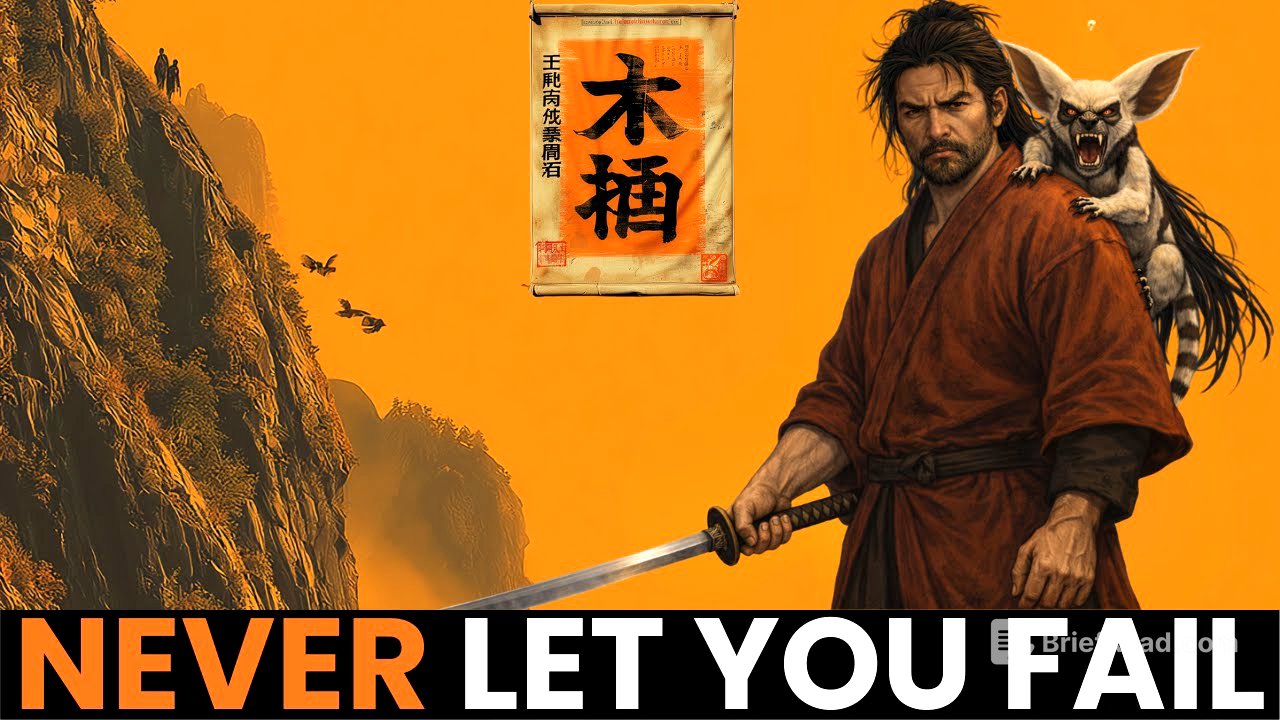
This video tells the story of Jikumo, a masterless samurai, and his unwavering commitment to the principle of Zanshin—remaining awareness. Through rigorous daily practice and adherence to this principle, Jikumo survives 100 battles and numerous temptations, ultimately becoming a teacher himself. The video emphasizes that true discipline is maintained even when no one is watching, and that Zanshin is not just for combat but for life, enabling one to stay true to oneself amidst challenges and temptations.
- Jikumo's journey as a ronin highlights the importance of discipline and awareness.
- Zanshin, the principle of remaining awareness, is crucial for survival and staying true to oneself.
- Daily practice and commitment are essential for building character and maintaining discipline.
Intro [0:00]
The video opens with a scene of Jikumo, a samurai, ambushed by bandits. He swiftly defeats most of them but remains alert, sensing a hidden enemy. This illustrates Zanshin, the concept of remaining awareness and discipline, which is key to Jikumo's survival through 100 battles over 20 years. The video promises to share Jikumo's story and how he achieved this state of constant readiness.
CHAPTER 1 — THE WANDERING BEGINS [1:30]
In the spring of 1560, Jikumo, at 18, becomes a ronin after his lord's assassination. Before leaving, his master, Taan Sensei, warns him about the dangers of his path and imparts the concept of Zanshin—remaining awareness. Taan Sensei demonstrates Zanshin by maintaining a ready position even after stopping a sword swing, emphasizing that a warrior's awareness must always be present, not just during combat but in all aspects of life, to avoid complacency and maintain discipline. He instructs Jikumo to practice 50 cuts every morning, holding Zanshin after each one, as this practice will be more crucial for his survival than skill or strength.
CHAPTER 2 — THE DAILY PRACTICE [3:38]
Year one finds Jikumo on the eastern coast, alone and without a master. He begins his daily practice of 50 overhead cuts, holding Zanshin—remaining aware—for five seconds after each cut. This practice isn't about the cuts themselves but about training the mind to stay present and never fully let go. Over 20 years, Jikumo maintains this ritual in various locations and conditions, never skipping a day. Other ronin mock him, questioning the need for daily practice without a master's supervision, but Jikumo understands that true discipline is what one maintains when no one is watching, highlighting the essence of Zanshin and the warrior's way.
CHAPTER 3 — THE VILLAGES AND THE TESTS [5:36]
Over the years, Jikumo faces various tests that challenge his commitment to his path. In one instance, he helps a village fend off bandits, and the villagers offer him a permanent position with comfort and security. In another, he meets a woman who asks him to settle down. Later, a daimo offers him command of 50 men with rank and purpose. Each time, Jikumo is tempted by comfort, love, and power, but his daily practice of 50 cuts with Zanshin keeps him grounded and reminds him of his promise and true path. Zanshin becomes not just combat awareness but life awareness, helping him stay true to himself despite external pressures.
CHAPTER 4 — THE BATTLES [8:10]
Amidst the chaos of the Waring States period, Jikumo finds himself in numerous battles. In one instance, after defeating three ronin, he maintains Zanshin and detects a hidden fourth attacker. In another, he defends a merchant caravan and stays alert, anticipating the bandits' return. Even when wounded and exhausted, he continues his daily practice, reinforcing that discipline is what one does even when feeling terrible. In a duel with a master swordsman, Jikumo's Zanshin allows him to evade a hidden knife attack from his dying opponent. By year 18, having fought 90 battles, Jikumo's success is attributed not to superior skill or luck, but to his unwavering presence and sustained awareness.
CHAPTER 5 — THE HUNDREDTH BATTLE [10:16]
In his 100th battle, Jikumo faces an ambush in a mountain pass. After quickly defeating several bandits, he doesn't relax but maintains Zanshin, sensing a hidden archer. This awareness allows him to evade the archer's attack and win the battle. Jikumo reflects on his 20-year journey and the promise he made to his master, realizing that his daily practice has built character and commitment. He continues his practice the next morning, understanding that warriors practice until they can't get it wrong, and Zanshin means never stopping.
CHAPTER 6 — THE WARRIOR TRUTH [12:54]
Jikumo reflects on the warrior's truth: the most dangerous battles are those that come after one thinks the fight is over. He emphasizes that Zanshin is crucial not just in battle but in life, preventing one from losing everything by relaxing too soon. He uses examples of an entrepreneur, athlete, and student who fail after achieving success due to abandoning discipline and awareness. Zanshin teaches that the battle is never completely over, and sustained presence and commitment are essential.
CHAPTER 7 — THE LEGACY [14:32]
Two years later, Jikumo, now 40, is approached by a young samurai seeking to learn how he became undefeatable. Jikumo explains that it's not about being undefeatable but about never dropping awareness. He demonstrates his daily practice of 50 cuts with Zanshin, emphasizing that it has made him present and disciplined. He reiterates that warriors who die are those who relax too soon and that Zanshin means maintaining awareness always. The young warrior becomes his student, and the cycle continues. The video concludes by encouraging viewers to choose a daily practice to maintain awareness and stay true to themselves.